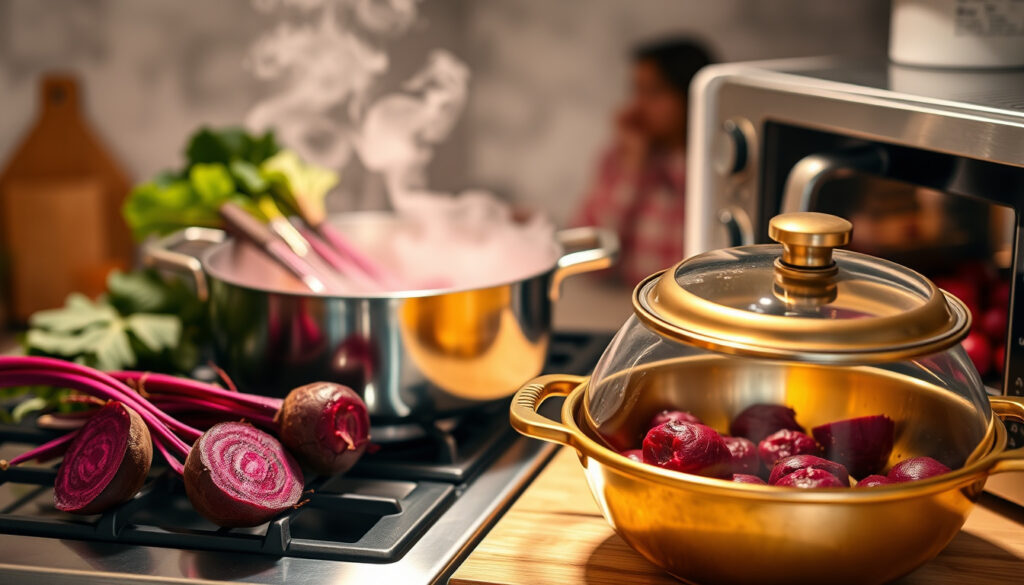
How to Cook Beetroot: Stove, Oven, Microwave Guide
Beetroot intimidates many home cooks—but it shouldn’t. The deep purple root roasts into caramelized sweetness, microwaves to fork-tender perfection in under 15 minutes, and boils to a versatile base for salads and pickles. This guide covers three reliable cooking methods with verified times, plus answers to common health questions drawn from medical sources.
Boiling time: 30-45 minutes · Roasting time: 2-3 hours · Microwave time: 5-15 minutes · Health focus: Heart patients and fatty liver
Quick snapshot
- Boiling preserves most nutrients including folate and betalains (WebMD)
- One cup of raw beetroot (136g) contains 58 calories, 13g carbs, 3.8g fiber, 2.2g protein (AgClassroom)
- Beets are naturally high in nitrates, which the body converts to nitric oxide (WebMD)
- How much cortisol reduction occurs in humans from beet consumption remains under investigation (WebMD)
- Direct arterial plaque removal from beet nitrates has not been conclusively demonstrated in clinical trials (WebMD)
- Microwave method gaining popularity for weeknight meals due to speed (Recipe This)
- Indian-style and baby-food preparations expanding recipe options (Healthline)
- Healthline published beetroot nutrition guide on May 12, 2023 (Healthline)
- PMC NCBI scientific review on beetroot biological activities published in 2021 (PMC NCBI)
Five cooking approaches appear across reliable sources, with timing variation driven primarily by beet size and chosen method.
| Method | Time | Key detail |
|---|---|---|
| Stove boiling | 30-45 minutes | Simmer until fork-tender |
| Oven roasting | 2-3 hours | Wrapped in foil at 325°F (160°C) |
| Microwave whole | 10-15 minutes | With 1/4 cup water, covered |
| Microwave cubed | 13-14 minutes per 420g | With 1 tsp water per beet |
| Stove simmering | 20 minutes to 1 hour | Smaller beets on low heat |
Do I peel beetroot before boiling?
Preparation steps
Wash the beets gently under cool running water without tearing the skins. The skin acts as a protective barrier during cooking and helps retain color and nutrients. Leave the root end and stems intact for the same reason. Place whole, unpeeled beets in a large pot and cover with cold water.
Skin removal tips
After cooking, drain the beets and let them cool until manageable to handle. The skins slide off easily when rubbed with a paper towel or back of a spoon. If any skin resists, a gentle rub under cool running water takes care of it.
Why add vinegar when boiling beets?
Vinegar benefits
Adding one to two tablespoons of vinegar to the boiling water serves two purposes. It helps the beets retain their vibrant deep red color rather than bleeding into the water or turning dull. It also slightly firms the flesh, which some cooks prefer for salads and cold dishes.
Recipe with vinegar and sugar
For a sweet-tart pickled effect, add two tablespoons of white vinegar and one tablespoon of sugar to the pot along with water. Bring to a boil, then simmer 30 to 45 minutes until fork-tender. This method works well if you want beets that are ready to slice for salads without additional dressing.
Vinegar does more than season—it stabilizes betalain pigments that give beets their characteristic color and potential antioxidant benefits.
The implication: skipping vinegar risks both color bleed into cooking water and a duller final appearance in your finished dish.
How to cook beetroot in the oven?
Roasting steps
Preheat your oven to 325°F (160°C). This lower temperature allows the beets to cook through evenly without charring the exterior. Place each whole beet on a sheet of aluminum foil, bring the sides up around it, and seal the top loosely to create a packet. Set the packets on a baking sheet.
Foil wrapping method
Sealing the beets in foil traps steam, which cooks them from the inside while the dry oven heat caramelizes natural sugars. Depending on size, beets take two to three hours. Test with a fork inserted near the center—it should slide in without resistance.
Roasting at 325°F produces a sweeter, more concentrated flavor than boiling because moisture evaporates and sugars concentrate.
What this means: choose roasting when you want beets with deeper flavor, and boiling when you need a quicker turnaround or milder taste.
How to cook beetroot in microwave?
Microwave timing
Whole beets require 10 to 15 minutes on high power with 1/4 cup water added to the bowl and a tight cover. The exact time depends on beet size—one medium beet typically needs about 12 minutes. Let the beets rest covered for five minutes after microwaving, then test with a fork.
Quick prep variations
Cubed beets cook faster at 13 to 14 minutes per 420 grams (about one pound), with one teaspoon of water per beet added before covering. Canned beets, already cooked, only need three to five minutes in their own liquid. A steamer basket method works too: slice peeled beets into wedges, add one tablespoon water to the steamer, and cook seven minutes on 800-watt microwave power.
The fork-tender test is essential—microwave timing varies by wattage and beet density, so a visual check after resting catches any undercooked spots.
The catch: microwave beetroot sacrifices the caramelized depth of roasting for speed, making it ideal for weeknights but less suitable for dishes where flavor depth matters.
How to cook beetroot on stove?
Boiling method
Place whole, washed beets in a pot and cover with cold water by at least two inches. Bring to a boil over high heat, then reduce to a steady simmer. Medium to large beets need 30 to 45 minutes to reach fork-tender. Smaller beets may be ready in 20 minutes.
Stove simmering variations
For firmer flesh with a slight bite, simmer on low heat for less time and cool quickly in ice water—this firms the texture, which some prefer for cold beet salads. For softer, more meltable texture perfect for purees or soups, continue simmering until the fork slides through easily.
The pattern: simmer time determines texture—shorter cooks yield firm, bitey flesh ideal for cold salads, while extended simmering produces the velvety consistency needed for purees and soups.
Cooking methods: a side-by-side comparison
Three primary methods dominate reliable sources, each suited to different outcomes and time constraints.
| Method | Time | Flavor result | Best for |
|---|---|---|---|
| Boiling | 30-45 min | Mild, slightly earthy | Salads, pickling |
| Roasting | 2-3 hrs | Sweet, caramelized | Side dishes, warm servings |
| Microwave | 5-15 min | Fresh, steamed quality | Weeknight quick meals |
Upsides
- Boiling preserves folate, manganese, and betalains that support blood vessel health
- Folate in beets helps control blood vessel damage, reducing heart disease and stroke risk
- Potassium in beets reduces blood pressure and supports heart function
- Beet fiber promotes gut bacteria growth, improves digestion, and reduces constipation
- Nitric oxide from beets increases blood flow by relaxing blood vessels
Downsides
- People prone to kidney stones or gout should limit beetroot due to oxalate content
- Cortisol reduction effects in humans remain understudied
- Direct arterial plaque removal from beets lacks conclusive clinical evidence
- Microwaving may reduce some heat-sensitive nutrients compared to raw consumption
WebMD (Health Publication)
Beetroot and its juice help your heart and lungs work better during exercise.
PMC NCBI (Scientific Review)
Beets high in nitrates enhance athletic performance, boost hemoglobin, and reduce muscle soreness.
FepBlue (Health Benefits Guide)
Beets contain betaine antioxidant for cell protection against cancer, heart disease, dementia.
Blue Jean Chef (Cooking School)
Each average beet microwaves 5-6 minutes or 10-12 minutes per pound with 2 tablespoons water, covered.
Related reading: How to Clean Difficult Stains: Proven Tips & Remedies
Frequently asked questions
Can heart patients eat beetroot?
Heart patients can generally include beetroot in their diet. The potassium and nitrates in beets support healthy blood pressure levels, and folate helps control blood vessel damage. However, those on blood pressure medication should consult a doctor because the nitrates may amplify effects.
Who should not eat beetroot?
People prone to kidney stones or gout should limit beetroot consumption due to oxalate content. Those with severe hypotension may also want to moderate intake because nitrates can lower blood pressure further.
Is beetroot good for fatty liver?
Beetroot may support fatty liver conditions indirectly through its betaine content, which helps protect liver cells, and fiber, which aids digestion and reduces metabolic stress on the organ. The antioxidants in betalains also help reduce liver inflammation.
Can beets remove plaque from arteries?
Beets contain nitrates that support healthy blood flow and vessel function, which may help slow arterial buildup over time. However, claims that beets directly remove existing arterial plaque are not supported by current clinical evidence.
What happens 3 hours after eating beets?
Blood nitrate levels peak within two to three hours of eating beets, leading to maximum nitric oxide production. Individual blood pressure responses vary significantly—some people experience noticeable lowering, while others show minimal change.
How to cook beetroot Indian style?
Indian-style beetroot often involves spiced preparations. Peel and grate raw beets, then sauté in oil with cumin seeds, turmeric, and coriander. Alternatively, boil whole beets, peel, and add to tamarind-based sauces for a sweet-sour effect common in South Indian dishes.
How to cook beetroot for salad?
Boil whole beets 30 to 40 minutes until fork-tender, cool, peel, and slice. Dress with olive oil, lemon juice, salt, and pepper. For a more elaborate salad, dice and toss with crumbled feta, toasted walnuts, and fresh herbs like dill or mint.
More related posts
 Arsenal Complete Eberechi Eze Transfer for £67.5m
 Fergus Club Mallorca Waterpark: Rides, Access, Guide
 Silver Springs Hotel Cork: Location, Rooms & Reviews Guide
 GAA on TV This Weekend – Full Schedule, Channels and Streams
 Newcastle vs Crystal Palace: TV, Postponement & H2H
 Peking Duck Near Me Dublin: Prices, Portions & Top Spots
 Today’s Football Scores: Live Updates & Results
 M&S Liffey Valley: Opening Hours, Store Info & Ireland Closures
