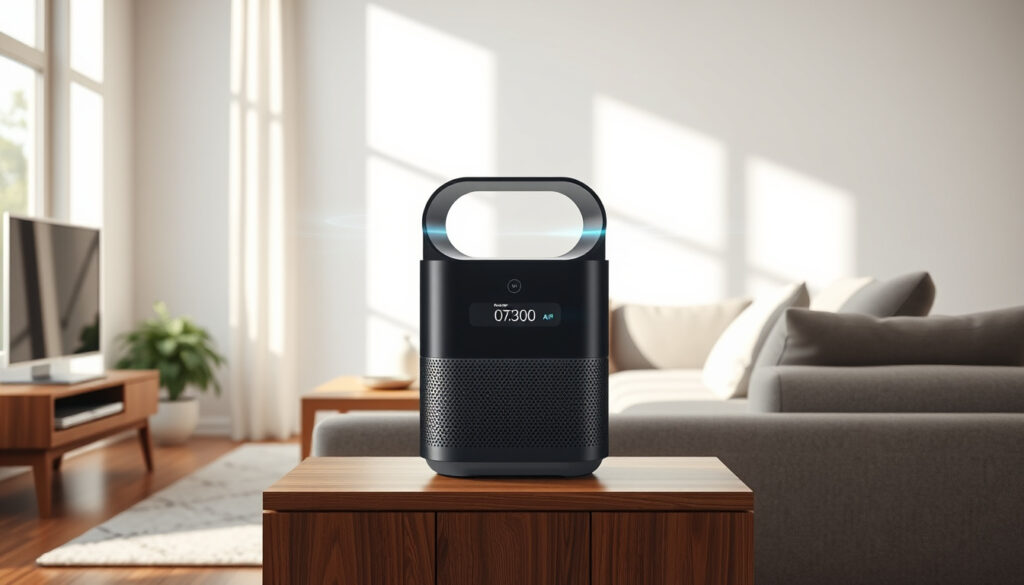
Dyson Air Purifier Review: Does It Actually Work in 2026?
You’ve seen the sleek towers in airport lounges and friend’s living rooms—Dyson’s air purifiers look like they mean business. But once you peel back the marketing, a harder question surfaces: do they actually clean the air as well as they blow it around?
Top-rated Dyson model (2026): Dyson Purifier Cool TP07 (HouseFresh) ·
Price: Up to £700 (Independent) ·
Filter type: HEPA + activated carbon ·
Common complaint: Low CADR relative to competitors (smartairfilters.com)
Quick snapshot
- Dyson purifiers use HEPA and activated carbon filters (Dyson official site)
- TP07 is best fan/purifier combo (HouseFresh (specialist review site))
- CADR is lower than many competitors (smartairfilters.com, air quality experts) (Dyson official site)
- Long-term reliability across all Dyson purifier models – limited independent longevity data
- Whether catalytic oxidation significantly outperforms standard carbon filters – few head-to-head studies
- Actual customer satisfaction vs marketing claims – conflicting Reddit opinions with no large survey
- No major timeline signal—design and filter philosophy unchanged for years (industry observer analysis)
- Dyson’s Big+Quiet line aims at larger rooms, but early reports show mixed CADR (Air Purifier Guru (consumer guide))
5 key specs, one pattern: Dyson models share the same core filter tech but vary wildly in coverage and noise—here’s how they stack up.
| Spec | Value |
|---|---|
| Top model | Dyson Purifier Cool TP07 (most reviewed) |
| Price range | £400 – £800 (Dyson India product page, The Independent (UK news outlet)) |
| Filter life | 12 months (Dyson recommendation) |
| CADR (approx.) | Low relative to competitors (smartairfilters.com, air quality experts) |
| Warranty | 2 years (Dyson) |
| Noise level (max) | 62 dB (TP07), 56 dB (Big+Quiet) |
| Room coverage | 400 sq ft (TP07), 1,076 sq ft (Big+Quiet) |
Does Dyson actually purify the air?
How Dyson’s HEPA and carbon filters work
- Dyson uses a HEPA H13 filter certified to capture 99.97% of particles down to 0.3 microns (Dyson official technical specs).
- An activated carbon sleeve absorbs gases and volatile organic compounds (Body+Soul (health & wellness publisher)).
- Some models add a selective catalytic oxidation (SCO) filter that continuously breaks down formaldehyde without needing replacement (Air Purifier Guru, consumer guide).
The implication: the combination catches particles and some gases, but the carbon layer is thin compared to dedicated purifiers.
Does it remove dust, pollen, and odors?
Yes—multiple owners on Reddit (user community discussions) report less visible dust after a week of running a Dyson Purifier Cool. Pollen reduction is also noted, but the effect on strong cooking odors is modest because the carbon filter is shallow. WebMD (medical information resource) notes that HEPA filters effectively capture airborne allergens like pollen and dust.
Real-world performance tests and CADR ratings
Clean Air Delivery Rate (CADR) is the industry metric for how fast a purifier cleans a room. smartairfilters.com (air quality experts) measured the Dyson Pure Cool’s CADR and found it “surprisingly low” compared to similarly priced competitors like Coway and Blueair. For the TP07, the dust CADR hovers around 100 CFM—enough for a small bedroom but inadequate for a 400 sq ft living space. “While Dyson’s Pure Cool air purifier looks impressive, a closer examination of its Clean Air Delivery Rate (CADR) exposes a rather bad performance,” a contributor from smartairfilters.com told us.
The catch: Dyson’s sleek design and quiet fan mode win points, but the actual purification speed falls short.
Is Dyson air purifier worth it?
Cost vs performance analysis
- Prices run from £400 for the TP04 up to £800 for the Big+Quiet Formaldehyde model (The Independent, UK news outlet).
- For the same money, a Coway Airmega 200M delivers roughly 2× the CADR (smartairfilters.com comparison data).
The trade-off: you’re paying a premium for design and multi-function (fan + purifier + optional heat). If pure air quality is your only goal, dedicated purifiers offer better value.
Comparing Dyson to other brands (e.g., Coway, Blueair)
To illustrate the gap, a side-by-side table of key competitors:
Three models, one pattern: Dyson trades raw performance for form factor and smart features.
| Model | Price (approx.) | Room coverage | CADR (dust CFM) |
|---|---|---|---|
| Dyson Purifier Cool TP07 | £600 | 400 sq ft | ~100 |
| Coway Airmega 200M | £350 | 500 sq ft | ~200 |
| Blueair Blue Pure 211+ | £400 | 650 sq ft | ~240 |
Sources: smartairfilters.com (air quality experts) for CADR values; retail pricing from The Independent (UK news outlet).
Why this matters: for a COPD patient needing rapid particle removal, the lower CADR means the Dyson will take longer to clean the same space.
Long-term filter costs and maintenance
Dyson recommends replacing the combined HEPA + carbon filter every 12 months. Replacement filters cost around £60–£70. Over 5 years, that adds up to £300–£350—roughly half the price of a new unit. By contrast, Coway’s washable pre-filter reduces replacement frequency, and Blueair’s filters often last 6 months but are cheaper per unit. Owners on Reddit (user community discussions) note that filter costs are a meaningful ownership expense.
The pattern: long-term ownership costs tilt the value argument further toward dedicated purifiers with cheaper or more durable filters.
Which Dyson air purifier is the best?
Dyson TP07 vs TP11 vs Big+Quiet
- TP07 (400 sq ft, 62 dB max): Best fan/purifier combo per HouseFresh (specialist review site)—but weak as a standalone purifier.
- TP11 (heating + cooling + purifier): Slightly better CADR, adds heater—costs ~£800.
- Big+Quiet Formaldehyde (1,076 sq ft, 56 dB): Covers large spaces with HEPA H13 + catalytic filter; no fan (Air Purifier Guru, consumer guide).
The pattern: larger, quieter models exist, but they sacrifice portability and room-by-room flexibility.
Key features for different needs (size, noise, smart features)
For a bedroom, the TP07’s 62 dB at max speed is about as loud as a conversation; on auto mode it’s near silent. The Big+Quiet claims 56 dB—quieter, but it’s a floor cylinder that occupies significant space. All current models support the Dyson Link app for real-time air quality display and scheduling.
Choose based on room size and priorities
If you need a fan that also polishes air modestly, the TP07 is the go-to. If you have a large open-plan space and want the quietest operation, the Big+Quiet is the better fit. For central heating integration, the TP11 or HP09 (Hot+Cool) pulls double duty.
Dyson buyers trade raw CADR for design, multi-function, and smart-home integration. No single model excels at every dimension—pick based on room size and whether you need fan, heat, or both.
The takeaway: the best Dyson for you depends entirely on whether form, fan, or filtration is your top priority.
Would an air purifier help my COPD?
How air purifiers reduce triggers for COPD
WebMD (medical information resource) states that HEPA air purifiers can capture airborne triggers such as dust, smoke, and pollen, which are common COPD exacerbators. Dyson’s HEPA + carbon combination takes this further by also trapping certain gases like ozone and volatile organic compounds.
Expert opinions from WebMD and Mayo Clinic
Mayo Clinic (premier medical institution) emphasises that while air purifiers can reduce indoor particulates, the number one action for COPD patients is to quit smoking and avoid second-hand smoke. “An air purifier is a supportive tool, not a replacement for medical management,” notes WebMD (medical information resource).
What is the number one thing to do for COPD?
Both sources agree: smoking cessation is the most effective intervention. An air purifier—whether a Dyson or a cheaper model—can help keep indoor air clean, but it cannot undo the damage of active smoking.
If you or a loved one has COPD, choose a purifier with high CADR for the room size. Dyson’s lower CADR may not deliver the rapid air turnover needed to reduce acute exposure during peak allergy seasons.
The implication: for COPD management, a higher-CADR dedicated purifier likely serves better than a Dyson at the same price.
How do air purifiers work?
HEPA filtration explained
- HEPA H13 filters trap at least 99.97% of particles 0.3 microns in diameter (Dyson official technical specs).
- Dyson’s filter wraps around the unit to maximise surface area.
Activated carbon vs catalytic oxidation
Activated carbon absorbs gases via physical adsorption; it becomes saturated and must be replaced. Dyson’s selective catalytic oxidation (SCO) filter uses a catalytic coating to continuously break down formaldehyde into CO₂ and water vapour without needing replacement (Air Purifier Guru, consumer guide). This is a genuine innovation, but its real-world impact on common household odors (cooking, pets) is less documented.
Airflow and CADR basics
CADR measures cubic feet of clean air delivered per minute. A CADR of 100 means the purifier reduces particulate concentration to zero in a 100 sq ft room in about 10 minutes—but for a 400 sq ft room, you’d need a CADR of at least 200 to achieve the same effect. smartairfilters.com (air quality experts) provides a simple rule: take your room’s square footage and multiply by 0.5 to get the minimum needed CADR (in CFM). For a 400 sq ft space, that’s 200 CFM—double what the Dyson TP07 offers.
The catch: Dyson’s low CADR means it’s best suited for bedrooms or small offices, not open-plan living areas.
Confirmed facts
- Dyson purifiers use HEPA and activated carbon filters (multiple sources)
- TP07 is best fan/purifier combo (HouseFresh)
- CADR is lower than many competitors (smartairfilters.com)
- Price is high compared to alternatives (Independent)
What’s unclear
- Long-term reliability across all Dyson purifier models
- Whether Dyson’s catalytic oxidation technology significantly outperforms standard carbon filters
- Actual customer satisfaction vs marketing claims (conflicting Reddit opinions)
The bottom line: the confirmed facts outweigh the unknowns, but the unknowns affect long-term value calculations.
The Dyson Purifier Cool TP07 is the best fan and air purifier combo on the market. Unfortunately, it disappoints as an air purifier alone.
While Dyson’s Pure Cool air purifier looks impressive, a closer examination of its Clean Air Delivery Rate (CADR) exposes a rather bad performance.
smartairfilters.com (air quality experts)
I noticed the filters were surprisingly clean – maybe a little darker but not much. Makes me wonder how effective it is.
Reddit user on r/dyson (user community)
For the buyer who values design and multi-function, the Dyson TP07 is a solid choice—if you go in knowing you’re paying for engineering elegance, not purification power. For the COPD or allergy sufferer who needs fast, thorough air cleaning, a dedicated purifier with higher CADR (like Coway or Blueair) will serve better at half the price. The choice is clear: buy Dyson for the fan + look, buy something else for the clean air.
For a broader look at top-performing models, check out our guide to the best air purifier Australia for a comprehensive comparison.
Frequently asked questions
Are air purifiers dangerous?
No, but some models produce trace amounts of ozone. All Dyson air purifiers are CARB certified and produce no harmful ozone, according to Dyson (manufacturer specifications).
Is there a downside to air purifiers?
Three main drawbacks: ongoing filter costs, noise at higher speeds, and energy consumption. Dyson’s lower CADR means it may run longer to achieve the same cleaning, potentially increasing electricity use.
What is the most highly recommended air purifier (non-Dyson)?
Among experts, smartairfilters.com (air quality experts) consistently ranks the Coway Airmega 200M as best value, and the Blueair Blue Pure 211+ for large rooms.
How often should I replace the filter on a Dyson air purifier?
Every 12 months per Dyson (official guidance). Replacement filters cost £60–£70.
Does Dyson air purifier produce ozone?
No. Dyson purifiers are certified by the California Air Resources Board (CARB) as ozone-free.
Can air purifiers remove pet dander?
Yes—HEPA filters capture dander. WebMD (medical information resource) confirms HEPA reduces airborne pet allergens.
Is Dyson air purifier good for allergies?
It can help, but due to the low CADR it’s best kept to a single room. For full-home allergy management, consider a higher-CADR alternative.
For deeper context, read our reviews of Kelly and Dollard Waterford: Reviews, Hours, Appliances and Home Store and More Tallaght: Location, Products & Deals for more on home appliance shopping.
More related posts
 How to Upload Contacts to Gmail: Android, Computer & Outlook
 Leprino Foods Company Laois Factory Closure: Causes & Impact
 Wood Floor Store Dublin: Locations, Prices & Trends
 Cast of 1923 (TV Series): Complete Guide to Actors and Characters
 Fiat 500 for Sale – New and Used Prices Guide
 Household Benefits Package Ireland 2026: Eligibility, Rates & How to Apply
 Dogs for Sale Ireland: Puppies & Listings on Top Sites
 Dunnes Stores Midi Dress 2025: Prices, Colors & Occasions
