Ferry Ireland to France 2026: Routes, Duration, Prices & Dog Travel
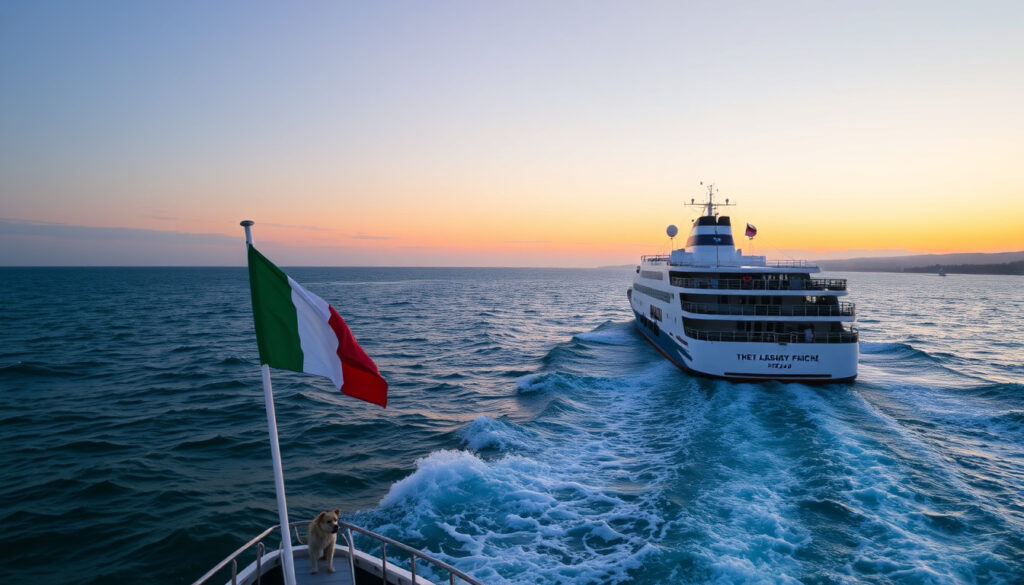
There’s a particular anticipation that comes with watching the Irish coast shrink from a ferry deck—an unhurried beginning to a French adventure. Whether you’re driving from Cork to Roscoff or rolling down the ramp in Rosslare for an overnight crossing, the ferry from Ireland to France is less a transport choice and more a deliberate way to travel. This guide lays out the routes, durations, pet policies, and cost realities so you can decide which crossing fits your trip.
Departure ports in Ireland: Cork and Rosslare ·
Ferry operators: Brittany Ferries and Stena Line ·
Shortest crossing time: 14 hours ·
Longest crossing time: 20 hours 15 minutes ·
Approximate adult fare range: €100 – €300
Quick snapshot
- Cork and Rosslare are active ferry ports for France (Brittany Ferries).
- Crossing times range from 14 hours to over 20 hours (NetFerry).
- Brittany Ferries and Stena Line are the two main operators (NetFerry).
- Exact 2026 schedules and pricing are subject to change.
- Fares for specific dates require a live booking check.
- No timeline-applicable data for this route set.
- 2026 timetables are typically published by late 2025; early booking is recommended.
For anyone travelling with a car, a pet, or a family, the ferry often ends up cheaper and less stressful than flying—but only if you pick the right route and book early. The trade-off is time: 14 to 20 hours at sea versus a 90-minute flight.
| Label | Value |
|---|---|
| Number of ferry operators | 2 (Brittany Ferries, Stena Line) |
| Irish departure ports | Cork, Rosslare |
| French arrival ports | Roscoff, Cherbourg, Le Havre |
| Fastest crossing | Cork–Roscoff, ~14 hr |
| Slowest crossing | Rosslare–Le Havre, ~20 hr 15 min |
| Typical one-way adult fare | €100–€300 |
The pattern: the key facts table shows that crossing times and fares vary significantly by route and operator.
Where do ferries go from Ireland to France?
Departure ports in Ireland: Cork and Rosslare
- Brittany Ferries sails from Cork to Roscoff and from Rosslare to Cherbourg (Brittany Ferries (operator)).
- Stena Line operates from Rosslare to Cherbourg and Le Havre.
Arrival ports in France: Roscoff, Cherbourg, Saint-Malo, Le Havre
- Roscoff (Brittany) – served by Brittany Ferries from Cork.
- Cherbourg (Normandy) – served by both Brittany Ferries and Stena Line from Rosslare.
- Le Havre (Normandy) – served by Stena Line from Rosslare.
These four French ports connect you directly to Brittany and Normandy, each with easy onward driving to Paris, the Loire, or the Atlantic coast. The pattern: Cork gives you the fastest crossing; Rosslare gives you more destination choices.
How long is the ferry from Ireland to France?
Three routes, three durations—here’s the breakdown.
| Route | Operator | Duration |
|---|---|---|
| Cork → Roscoff | Brittany Ferries | 14 hours |
| Rosslare → Cherbourg | Brittany Ferries | 18 hours |
| Rosslare → Le Havre | Stena Line | 20 hours 15 minutes |
The implication: the Cork route cuts your sea time by at least four hours compared to the longest option.
- The shortest crossing is Cork to Roscoff at approximately 14 hours (NetFerry (aggregator)).
- The longest is Rosslare to Le Havre at around 20 hours 15 minutes.
- Duration varies by route and operator.
The trade-off: a faster crossing means less onboard time but earlier departure; the longer sailings include an overnight cabin and a full day at sea.
Is there a direct ferry from France to Ireland?
Direct ferries from France to Ireland
Yes, direct ferries operate from France to Ireland, returning from the same ports. Both Brittany Ferries and Stena Line run return sailings on the same routes (Brittany Ferries).
Return routes and operators
- Roscoff → Cork (Brittany Ferries)
- Cherbourg → Rosslare (Brittany Ferries or Stena Line)
- Le Havre → Rosslare (Stena Line)
The implication: you can book a round trip easily, but note that the return crossing is the same length as the outward.
What is the cheapest ferry from Ireland to France?
Comparing fares across operators
- Cheapest one-way adult foot-passenger fares start around €100, rising to €250 in peak season.
- Car + driver fares range from €200 to €400 (NetFerry).
- Brittany Ferries often offers early booking discounts; Stena Line’s low-cost fares are comparable.
Seasonal pricing and discounts
- Winter sailings are significantly cheaper than summer.
- Loyalty programmes (e.g., Brittany Ferries’ Club Voyage) provide repeat discounts.
The catch: the cheapest sailings sell out months ahead, especially for vehicle crossings.
Is a ferry cheaper than flying?
Cost comparison: ferry vs flight
- Flights from Dublin or Cork to Paris can cost as little as €50 one-way with budget airlines.
- Ferries become more economical for families or those travelling with a vehicle.
- Add transfer costs to and from airports and ports.
Time and convenience factors
- Flight time: 1.5 hours, but add check-in, security, and transfers.
- Ferry: 14–20 hours, but you can take unlimited luggage and your car.
- For a passenger without a car, flying is usually cheaper and faster.
Hidden costs (bags, transport to ports)
- No checked-bag fees on ferries.
- Port parking and train connections from Rosslare or Cork add to cost.
The pattern: if you’re a solo traveller on foot, fly. If you’re a family with a car, the ferry often wins on value and comfort.
What is the shortest ferry crossing from Ireland to France?
Cork to Roscoff: the shortest route
- Cork–Roscoff is the shortest at about 14 hours (NetFerry).
- Departures are usually overnight, arriving the next morning.
Impact of weather on crossing times
- Weather conditions can occasionally extend crossing times by an hour or two.
- Winter storms may cause cancellations; travel insurance is advised.
Why this matters: the Cork route is the only option under 15 hours, ideal for travellers who want a short sea journey.
All durations and fares are from operator and aggregator data as of 2025. 2026 schedules will be released by late 2025; book early for the best rates.
Comparison: Ireland–France ferry routes
Three routes, two operators, one key difference: time versus destination choice.
| Route | Operator | Duration | Adult one-way (approx) | Car + driver (approx) |
|---|---|---|---|---|
| Cork → Roscoff | Brittany Ferries | 14 hr | €100–€200 | €200–€350 |
| Rosslare → Cherbourg | Brittany Ferries / Stena Line | 18 hr | €120–€250 | €250–€400 |
| Rosslare → Le Havre | Stena Line | 20 hr 15 min | €130–€300 | €280–€400 |
The pattern: the Cork–Roscoff crossing offers the best balance of speed and cost for most travellers.
Pros and cons of ferry vs flying
Upsides
- Take your car, bike, or unlimited luggage.
- No weight restrictions on luggage.
- Pets can travel in kennels or vehicles (advance booking required).
- Overnight cabins save on accommodation.
- Often cheaper per group for vehicle travel.
Downsides
- Much longer travel time (14–20 hours vs 1.5-hour flight).
- Fewer departure frequencies (Brittany Ferries runs 11 trips per week NetFerry).
- Weather can cause delays or cancellations.
- Return sailings may not align with your plans.
- Foot passengers pay similar to flight cost for far more time.
What this means: the ferry makes sense only when you factor in what you carry—car, pet, family—not just the ticket price. For a detailed look at ferry schedules and routes, see the Ipswich Town vs Arsenal timeline.
Clarity: what we know and what’s uncertain
Confirmed facts
- Cork and Rosslare are active ferry ports for France.
- Crossing times range from 14 to 20+ hours.
- Brittany Ferries and Stena Line are the two main operators.
What’s unclear
- Exact 2026 schedules and pricing are subject to change.
- Fares for specific dates need live booking check.
Quotes from operators and aggregators
“You can travel to France from two Irish ports, Cork and Rosslare.”
— Brittany Ferries (operator)
“Ferry duration from Ireland to France ranges from 15 hours to 20 hours 15 minutes.”
— Direct Ferries (aggregator)
Summary
The ferry from Ireland to France is not for everyone—but for those with a car, a pet, or a love of slow travel, it’s a smart, often cheaper alternative to flying. For families and drivers, the choice is clear: book early on the Cork–Roscoff route if you value speed, or choose Rosslare–Cherbourg for frequency. For solo foot passengers, flying will almost always win on time and budget.
For those departing from the south, the Cork to France ferry offers a direct alternative to the longer crossings from Dublin.
Frequently asked questions
Can I take a car on the ferry from Ireland to France?
Yes, both Brittany Ferries and Stena Line allow cars. You book a “car + driver” ticket; the vehicle is driven onto the car deck.
Which ferry operator accepts pets?
Both Brittany Ferries and Stena Line allow pets (dogs and cats) in kennels or in a vehicle. Advance booking is required, and a fee applies (€30–€50). Brittany Ferries (pet policy)
Do I need a passport for a ferry from Ireland to France?
Yes, you need a valid passport or EU ID card. Pets need an EU Pet Passport or Animal Health Certificate (Irish Ferries (travel advice)).
How early should I arrive at the ferry port?
For foot passengers, at least 1 hour before departure; for vehicles and pets, 2 hours. Pet check-in is specifically required 2 hours before departure (Irish Ferries).
Are there overnight cabins on Ireland–France ferries?
Yes. All crossings include cabin options (inside, sea-view, deluxe). Book in advance, especially in summer.
What is the cancellation policy for Brittany Ferries?
Brittany Ferries offers flexible fares with free cancellation up to 14 days before departure; standard fares incur a fee. Check your ticket type at booking.
Is there a loyalty program for frequent ferry travelers?
Brittany Ferries runs Club Voyage (points for every crossing). Stena Line has Stena Plus (priority boarding and lounge access).
More related posts
 How to Improve Your Credit Score: 7 Proven Steps (Ireland & UK)
 Monarch Legacy of Monsters Season 2 Renewal Status
 Black Air Force 1: Price, History & Hype Explained
 Niamh Farrell GAA Catfish – What Really Happened
 House Insurance Comparison Ireland – Top Providers, Quotes and Savings
 Budget 2026 Child Benefit: €140 per Child, No Double Payment
 เว็บสล็อต www.virgo222.net: Verified Info & User Guide (2025)
 How to Bake Potatoes in Oven for Crispy Skin
