What is Happening in Indonesia? Protests, Fires and Tensions
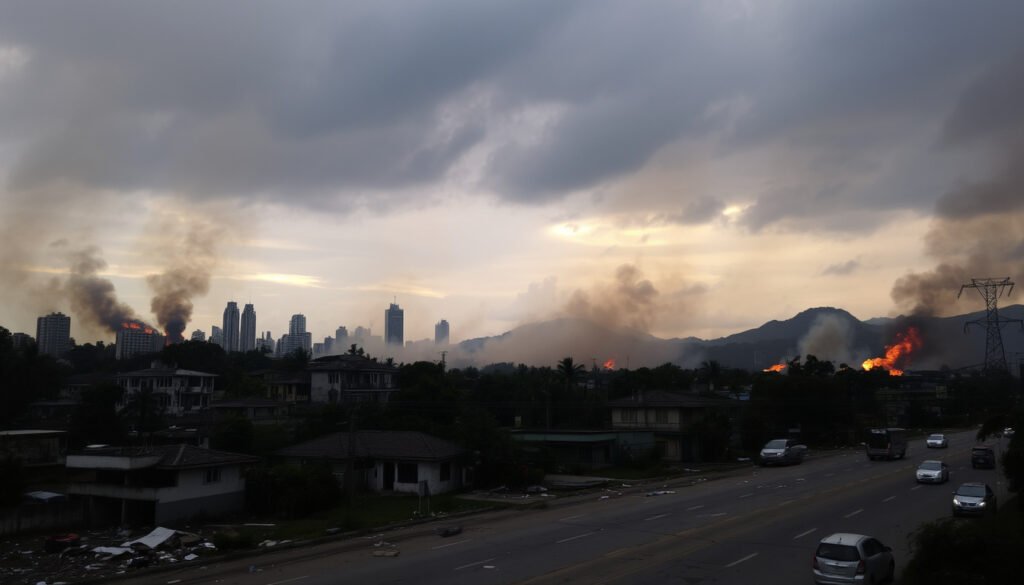
Anyone checking the news from Indonesia in 2025 is seeing two very different stories at once: loud protests in the cities and a choking haze drifting from forest fires in Sumatra and Borneo. The unrest began in late August after police killed a motorcycle taxi driver in Jakarta, widening into weeks of demonstrations, while fire crews contained one of the worst fire seasons in more than a decade.
Population: ~275 million ·
Muslim population: ~87% ·
Recent protests: August 2025 ·
Wildfire deaths: 4 ·
Stock market drop: 11%
Quick snapshot
- Demonstrations occur frequently in Indonesia and can vary widely in size, impact, and violence (U.S. State Department travel advisory).
- How long El Niño will stretch the fire season (Reuters).
- August 25, 2025: police kill a motorcycle taxi driver in Jakarta, sparking protests (Al Jazeera).
- September 2025: the IDX stock index drops 11% (Jakarta Post).
- Monitor haze alerts in the six priority fire provinces (Reuters).
Six facts, one pattern: a large, diverse country where national law and local rules can differ sharply.
| Category | Detail |
|---|---|
| Capital | Jakarta |
| Official language | Indonesian |
| Government | Unitary presidential republic |
| Legal system | Civil law; sharia in Aceh |
| Population | ~275 million |
| Major religions | Islam, Christianity, Hinduism, Buddhism |
Why are people in Indonesia protesting?
The short answer: a single police killing in Jakarta lit the fuse, but economic frustration had been building for months before that.
Al Jazeera’s Inside Story program described violence on the streets after a motorcycle taxi driver was run over and killed by police. The trigger is clear; the full scale is harder to pin down.
What sparked the protests?
- On August 25, 2025, police in Jakarta killed a motorcycle taxi driver.
- Protests in Jakarta expanded to other major cities by the end of August.
- Economic grievances continued to fuel the movement even after the initial shock of the killing.
The U.S. State Department travel advisory notes that demonstrations occur frequently in Indonesia and can vary substantially in size, impact, and violence.
Government response
- The president publicly apologised for the police killing.
- The U.S. State Department warns that foreign nationals can be deported for participating in demonstrations while on a tourist visa (U.S. State Department travel advisory).
The apology came after the movement had already spread. A police killing can be addressed with accountability; the economic conditions that made the killing a rallying point are harder to fix.
The trade-off for the government is visible in the streets: a harder line risks new unrest, while a softer line risks looking weak. Neither option removes the underlying economic pressure.
Impact on daily life
- Protests were concentrated in Jakarta and other major cities, not in rural areas or resort destinations.
- The U.S. State Department advises people to avoid demonstrations because they can turn violent.
- For most residents outside central protest zones, daily routines continued with limited disruption.
What is the current situation in Indonesia?
Three crises are running at once: forest fires producing regional haze, political fallout from the protests, and a stock market that just took a shock. Each has its own timeline, but together they explain the headlines.
Forest fires and haze
- Indonesian authorities identify Riau, Jambi, South Sumatra, West Kalimantan, Central Kalimantan, and South Kalimantan as the six priority fire provinces, where national monitoring recorded 107,465 hectares burned from January through June (Reuters reporting).
- By the end of July, the burned area had reached about 200,000 hectares, as El Niño deepened the dry season (Reuters reporting).
- More than 12.5 million people across seven provinces were exposed to haze, and respiratory illness cases rose to 113,336 by September 9, up from 50,891 on September 1, according to Indonesian health ministry data cited by Reuters (Reuters reporting).
Peatland fires complicate the response: they can smoulder beneath the surface, re-emerge, and generate particularly thick smoke, according to Reuters.
The haze turns a rural fire problem into a public-health emergency in the cities of Sumatra and Borneo. When a local government moves every class online, the disruption is no longer just environmental.
The human sign of the crisis is visible in the classroom: Pontianak in West Kalimantan moved all classes online because of hazardous smog, a Reuters report noted.
Political developments
Protest wave: August 25 – September 2025 ·
Official response: presidential apology ·
Foreign nationals: deportation risk if they join protests
The government has tried to steady the situation with an apology for the killing and a call for public order. The pressure has eased, but the conditions that produced the protests have not disappeared.
The U.S. State Department still advises visitors to avoid demonstrations, a quiet signal that the security picture remains changeable.
Economic situation
- The IDX composite stock index dropped 11% in September 2025.
- The Jakarta Post tied the fall to the government’s stock-market warning: the headline said it plainly — “IDX plummets 11% after stock market warning.”
An 11% fall is a market event, not a market blip. It shows how quickly political risk can move capital.
The trade-off: short-term measures can steady a sell-off, but lasting confidence depends on the protests staying calm and the fire season ending.
The implication: Indonesia’s leadership must manage both environmental and political crises to restore stability and investor confidence.
Is Indonesia safe for tourists right now?
For most travelers, the honest answer is yes — with two caveats: avoid protest zones and treat haze seriously.
Safety advice for travelers
- The U.S. State Department’s travel advisory warns that demonstrations occur frequently and can vary substantially in size, impact, and violence (U.S. State Department travel advisory).
- Foreign nationals can be deported for participating in demonstrations while on a tourist visa.
- Outside protest zones, tourist safety is high; the risks are concentrated in specific city centres and wildfire-affected provinces.
For the typical tourist route — Bali and eastern Indonesia — the risk picture is far calmer than the protest headlines suggest. The places to avoid are specific and knowable: demonstration sites in Jakarta and other big cities, and the haze-heavy districts of Sumatra and Borneo.
The caveat is health, not just security. Haze moves with wind and rain, so the same province can be clear one week and hazardous the next.
Areas to avoid
- Active protest zones in Jakarta and other large cities; demonstrations can turn violent.
- Riau, Jambi, South Sumatra, West Kalimantan, Central Kalimantan, and South Kalimantan during haze peaks.
- Central Kalimantan districts around Katingan and Palangka Raya, where air pollution readings were reported at nearly 1,600 and 1,300 respectively on October 15, according to Reuters.
The same Reuters reporting that documented hazardous smog in Pontianak showed how quickly conditions can escalate across the region.
Travel restrictions and advisories
The U.S. State Department advisory is the baseline, not the ceiling. Foreign governments can tighten warnings quickly, and the deportation rule is a reminder that tourists are not exempt from local law.
Does Indonesia persecute Christians?
The question sounds binary, but the answer is not. Indonesia is not a sharia state, and religious minorities face a mix of constitutional protections, local discrimination, and legal challenges depending on where they live.
The national picture and the local picture can diverge sharply, which is why the answer depends so much on the province.
Is Indonesia run by sharia law?
- No. Indonesia is a unitary presidential republic with a civil-law system; sharia is not the national legal framework.
- Aceh is the notable exception: the province enforces sharia law for Muslims, which gives it a different legal character from the rest of the country.
The distinction matters for residents and visitors alike: the laws you live under in Jakarta are not the laws you live under in Aceh.
Is hijab mandatory?
- Hijab is not mandatory under Indonesian national law.
- In some regions, including Aceh, local regulations require Muslim women to wear the hijab in public.
The practical picture is layered: what is legal nationally can be different from what is enforced locally. A woman in central Jakarta and a woman in Aceh can experience very different dress-code realities.
Religious freedom in practice
Indonesia’s constitution protects religious freedom, and its national politics are not built around religious persecution. The friction happens lower down, in local regulations and legal challenges that affect religious minorities in some districts.
That decentralised pattern is why “does Indonesia persecute Christians?” gets a complicated answer: no at the national level, sometimes at the local level, with the severity depending on the province and the specific case.
Are more Muslims turning to Christianity?
This is the quiet demographic story beneath the loud political news: Indonesia’s religious balance is shifting very slowly, and the shift is smaller than many internet debates suggest.
Which religion is decreasing most?
- The Muslim share of Indonesia’s population is declining slowly, according to Pew Research Center data, because of a combination of conversions and lower birth rates among Muslims.
- Conversion to Christianity is a minority trend, not the widespread movement some viral claims suggest.
The wording matters: Pew’s data describes a gradual drift, not a wave. Even with a slowly shrinking share, Muslims remain the overwhelming majority of Indonesia’s population.
Do Muslims support LGBTQ?
- Public opinion surveys show low support for LGBTQ rights among Indonesian Muslims.
- LGBTQ rights are a separate social issue from conversion rates; conflating them obscures both questions.
The survey picture is consistent: the Indonesian Muslim public is socially conservative on LGBTQ questions. That stance shapes the wider environment for all minorities, but it is not itself a driver of religious conversion.
What will happen in 2030 for Muslims?
Pew’s 2030 projections keep Indonesia as one of the world’s largest Muslim-majority countries. The change is measured in small percentage-point shifts, not in a transformation of the country’s identity.
The forecast matters because public debates often treat conversion as a sudden trend. The data says the opposite: Indonesia’s religious balance in 2030 will look a lot like it does today, with Islam still dominant and other religious groups still present across the country.
Timeline: the past months at a glance
Seven moments, one pattern: an economic and environmental squeeze that keeps arriving in the same season.
| Date | Event |
|---|---|
| Early 2025 | Civil unrest begins over economic issues. |
| August 25, 2025 | Police kill a motorcycle taxi driver in Jakarta, sparking protests. |
| August – September 2025 | Widespread demonstrations take place across major Indonesian cities. |
| September 2025 | Four people are killed fighting wildfires in a national park. |
| September 2025 | The IDX stock index drops 11% after the government’s stock-market warning. |
| September – October 2025 | Haze spreads; Pontianak moves classes online, and respiratory cases climb. |
| October 15 | Air pollution readings in Katingan and Palangka Raya are reported at nearly 1,600 and 1,300. |
What stands out: the protest story and the fire story started separately but are converging in time, and both are putting pressure on the same government.
The headlines behind the news
Three headlines capture the scale of the moment.
“Four killed as Indonesia battles worst forest fires in more than a decade”
Al Jazeera report
“Violence on the streets of Indonesia after a motorcycle taxi driver is run over and killed by police”
Inside Story, Al Jazeera English
“IDX plummets 11% after stock market warning”
The Jakarta Post
“Indonesia races to contain fires as haze spreads across region”
Reuters
The outlook
Indonesia’s near-term direction will be set by two variables: how long El Niño keeps the fire season burning, and whether the government’s apology translates into changes in policing and economic policy that outlast the protests. None of the country’s core institutions is threatened, but all of them are under strain. For travelers, the implication is straightforward: stay out of protest zones, take haze alerts seriously, and keep plans flexible until the rains arrive. For investors, the trade-off is equally clear: Indonesia’s fundamentals remain intact, but the uncertainty premium will stay in the price until the fire season breaks and the political temperature drops.
auswaertiges-amt.de, bbc.com, rmb.reuters.com, reuters.com, en.antaranews.com, reuters.com
Frequently asked questions
How long have the protests been going on?
Protests began on August 25, 2025, after police killed a motorcycle taxi driver in Jakarta, and continued in waves into early September 2025. The U.S. State Department’s Indonesia advisory notes that demonstrations occur frequently and can vary widely in size, impact, and violence.
What caused the wildfires?
The fires are tied to a longer and more severe dry season as El Niño intensified, with land-clearing practices and peatland conditions adding to the risk. Reuters reports that peatland fires can smoulder beneath the surface, re-emerge, and generate especially thick smoke.
Is the Indonesian government taking action?
Yes. According to Reuters, Indonesia deployed more than 50 aircraft for water bombing and cloud seeding by September 16. Japan sent three CH-47 Chinook helicopters and 180 crew, and Malaysia offered three helicopters and an aircraft to assist with the firefighting response.
What is the economic impact of the unrest?
The IDX stock index dropped 11% in September 2025 after the government issued a stock-market warning, as reported by The Jakarta Post. The longer-term economic impact is still being assessed.
Are there travel advisories issued by foreign governments?
Yes. The U.S. State Department’s travel advisory for Indonesia warns that demonstrations can turn violent and that foreign nationals can be deported for participating in them while on a tourist visa. Tourists are advised to avoid protest areas.
What regions are most affected by haze?
The six priority provinces are Riau, Jambi, South Sumatra, West Kalimantan, Central Kalimantan, and South Kalimantan. More than 12.5 million people across seven provinces were exposed to haze, according to Indonesian health ministry data reported by Reuters.
How do local laws affect religious minorities?
Indonesia is not a sharia state: national civil law applies, and hijab is not mandatory under national law. The exception is Aceh province, where sharia is enforced for Muslims and local regulations create a different legal landscape.
More related posts
 Limerick vs Clare 2025: Clare Win 3-20 at TUS Gaelic Grounds
 Wood Floor Store Dublin: Locations, Prices & Trends
 India vs South Africa Cricket: Complete Head-to-Head Records
 99 Nights in the Forest Codes: April 2026 Active List
 How Old Was Priscilla When She Married Elvis? Age & Timeline
 Galway United vs Derry City FC – Match Preview and Prediction
