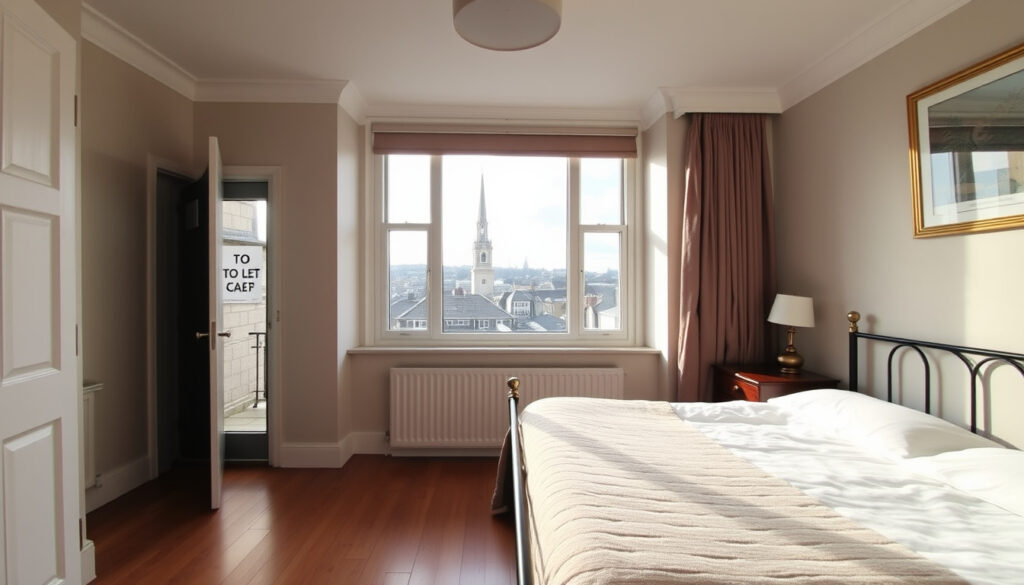
Single Room to Rent in Dublin: Average Costs & Tips for 2025
Finding a single room to rent in Dublin in 2025 can feel like a full-time job, especially with rents still climbing. But with the right data and a clear view of your rights, you can skip the guesswork and find somewhere that fits your budget.
Average monthly rent (single room): €1,100 ·
City centre average: €1,300 ·
Total rooms listed on Daft.ie: 923 ·
Typical deposit: One month’s rent
Quick snapshot
| Rental Term | Average Monthly Cost (€) | Key Notes |
|---|---|---|
| Single Room (City Centre) | €1,300 | Higher for high-spec, newer builds |
| Single Room (Shared House) | €1,100 | Average across all Dublin areas |
| Room (Outside Centre) | €500 – €700 | Low-end prices in outer suburbs |
| Two-Bed Apartment (City Centre) | €2,308 | RTB Q3 2025 index for Dublin |
The pattern is clear: the gap between a room and a full apartment is roughly the cost of groceries and a social life. For a single person, the savings on a room versus a one-bed apartment can be the difference between saving for a deposit and just getting by.
What is the average cost of renting a room in Dublin?
Dublin’s rental market is famously tight, and prices reflect that. Data from the Residential Tenancies Board (RTB) shows that in Q1 2025, the standardised average rent for a new tenancy in a Dublin two-bedroom apartment was €2,186. By Q2 2025, that figure had increased to €2,230, according to the RTB’s Q2 2025 report. This index is considered the most reliable official measure of the rental market in Ireland.
The Residential Tenancies Board clarifies that a tenancy is created when you rent a self-contained property.
For a single room, the LifeCost cost-of-living guide suggests a practical budget of €900 to €1,300 per month. A separate source, Spotahome, similarly notes that rooms in shared apartments can range from €700 to €1,400, depending heavily on location and amenities. In the city centre, expect to pay towards the top of that range. A 2026 report from The Journal noted that the average rent for a two-bedroom apartment in Dublin city was €2,696 in Q4 of the prior year, which gives a sense of the overall market benchmark.
Average room prices in Dublin
To put a finer point on it, here’s a breakdown of what you might expect to pay for a room, based on different sources. The Residential Tenancies Board reported that the average rent for a two-bedroom house in an existing tenancy in Dublin was €1,838. While this is not a per-room figure, it’s a useful benchmark for comparing the cost of a room versus a whole property. For a more direct comparison, a rent-a-room calculator from MyRoom.ie offers an estimated per-room figure of €769, which is based on the average for a property in the wider market. This suggests that renting a room is often around 30-50% cheaper than going for a full flat.
Differences between city centre and suburbs
Location is the single biggest driver of price in Dublin. City centre rooms are consistently more expensive, reflecting the premium for walkability and access to amenities. A room in the city centre will typically cost 30-50% more than a similar room in the outer suburbs. Data from Dublin People notes that West County Dublin, which includes areas like Dublin 15, had an average rent of €2,507 for a property. Renting a room in these areas, while still expensive, often represents a few hundred euros in savings per month compared to the city centre.
Variations by room type (single, double, ensuite)
The type of room also affects the price. A standard single room is the cheapest option. A double room will cost more, particularly if it’s a large room in a newer development. An ensuite room – which offers a private bathroom – commands a significant premium. While many of the 923 available rooms listed on Daft.ie are single or double, the number of ensuite rooms is smaller, which drives up their price due to higher demand. When looking, be clear about whether the price is inclusive of bills, as this can add €100–€200 to your monthly outgoings.
Can I rent a room only?
Yes, you can rent a room in Dublin, but it’s essential to understand the legal distinction that applies. In most cases, renting a room in a landlord’s home is not considered a standard tenancy. Instead, it is legally a licence. According to the Irish government, this distinction is crucial because it affects your rights. A licence gives you permission to live in the property, but it does not grant you the same security of tenure as a tenant under the Residential Tenancies Act.
Understanding the legal difference between a licence and a tenancy
The Residential Tenancies Board (RTB) clarifies that a tenancy is created when you rent “a self-contained” property. If you share the landlord’s home, your legal status is usually a licensee. This means the RTB has a role in resolving disputes, but the rules are different. For instance, the landlord doesn’t need as much notice to end a licence as they do to end a tenancy. It’s not a barrier to renting, but it’s a difference to be aware of so you’re not caught off guard.
How to qualify for a room
When you’re looking to rent a room, landlords will typically ask you to prove you are who you say you are. Standard requirements include a form of photo ID (passport or driver’s licence), proof of income (like recent pay slips or a bank statement), and references from a previous landlord or an employer. Some landlords may also run a credit check. The government’s Residential Tenancies (Amendment) Act 2025 aims to make the system fairer, but the onus is on you to have these documents ready.
Legal implications for the room owner
For the landlord, renting a room under a licence has specific legal implications. They are not required to register the licence with the RTB in the same way they would a tenancy, and the rent is not subject to the same Rent Pressure Zone (RPZ) rules in the same way. That’s why you’ll often see licence agreements for a fixed term of 6 or 12 months. This flexibility is part of why it’s a popular model in Dublin, but it also means less long-term security for you as the renter. The government guidance suggests it’s a trade-off both sides accept.
What does renting a room usually include?
The inclusions vary significantly by landlord, but there are some common patterns. Most rooms are rented on a “bills included” basis, which simplifies budgeting. This typically covers heating, electricity, and wi-fi. However, the definition of “bills” can be vague, so you should always clarify what exactly is included in the rent. A room costing €1,100 a month with bills included is often a better value than a room at €950 with €150 in bills on top.
Renting a room is almost always cheaper than renting an apartment or house on your own.
Included utilities (bills, heating, wifi)
Heating is a critical utility in Dublin. With the EU’s energy landscape and the cost-of-living crisis, many landlords have become more mindful of heating usage. Some have installed “smart” heating systems to manage costs. Wi-fi is often considered an essential utility, and most, but not all, room rentals include it in the price. The RTB advises that your rent agreement should explicitly state whether bills are included, and if not, which ones you’ll be responsible for. The difference between a “bills included” and “bills not included” rental could be €100–€200 per month.
Furnished vs. unfurnished
In Dublin’s rental market, most rented rooms come furnished. This usually includes a bed, a wardrobe or chest of drawers, and often a desk. This is standard across portals like Spotahome and Daft.ie. If a room is offered as “unfurnished,” it’s generally a sign that the landlord is less experienced with room rentals. When you’re comparing rooms, always ask for a list of what’s included in the room, and check if the common areas (kitchen, living room) are fully equipped.
Mandatory in all tenancies
There are certain things a landlord must provide by law, regardless of the licence. These include a working fire alarm and carbon monoxide detector, a gas safety certificate (if applicable), and ensuring the property meets minimum standards for habitation. The Residential Tenancies (Amendment) Act 2025 reinforced the landlord’s duty to maintain the property. While the licence doesn’t require a Written Statement of Terms, it’s a good idea to get a simple written agreement outlining the rent, deposit, and notice period.
What is it called when you rent a room?
This is a question that trips up many renters in Dublin. While you might assume “renting a room” is a formal category, it’s actually a landlord’s method of letting a spare room in their home, often to defray their own costs. According to the Residential Tenancies Board (RTB), the legal framework doesn’t change based on whether it’s a room or a whole apartment, but the practical rules can differ. The two most common types of room rentals are a “licence” (where you live in the landlord’s home) and a “tenancy” (where the room is self-contained, like a basement flat or an annex).
Definition of a licence
A licence is the most common legal structure for room rentals where the landlord lives in the same property. This means the owner grants you the right to reside in their home, but it is not considered a “tenancy” under the Residential Tenancies Act. The gov.ie guidance states that the Residential Tenancies (Amendment) Act 2025, which came into operation on 20 June 2025, extended and expanded Rent Pressure Zones to cover the entire country until 28 February 2026. This matters because while rent pressure zones apply to most tenancies, they may not apply to your specific licence if you share the house with the landlord. It’s a crucial distinction that affects how much your rent can increase each year. Since the law is complex, the exact number of room-sharing licences is not fully tracked, but the RTB does handle complaints if there’s a dispute.
A room in a shared house in Dublin 15 might be €900 and include bills, which is great if it’s a double. But you might also find a converted garage in the garden that’s €800 and excludes heating.
Legal implications for both parties
The practical difference between a tenant and a licensee in Dublin is security and rights. A tenant has a Part 4 tenancy after six months, which gives them strong protection from eviction. A licensee has no such Part 4 rights. This means you can be asked to leave the property with one month’s notice for no reason, whereas a landlord needs a valid reason to terminate a tenancy. For a room renter in Dublin, this is the single most important thing you need to understand. The government’s own guidance is clear on this point, and it’s a common area of confusion for renters. For example, a tenant in a self-contained flat can claim the Housing Assistance Payment (HAP), but a licensee in a shared house typically cannot apply for HAP for that specific room.
The implication: for a single person on a budget, the choice between renting a room and a flat is not just about price. It’s a decision about legal security. A room rental is a simpler, more flexible arrangement, but it’s a legal grey area. Always get your agreement in writing, and if a landlord refuses to put anything in writing, that’s a significant red flag.
Ask about the duration of the lease and notice period. Clarify if there are extra costs for utilities, parking, or cleaning. It’s also worth asking about house rules regarding guests, noise, and pets. With the average rent for a room in a shared Dublin household hitting €1,100 a month, asking these questions upfront is the only way to avoid a costly surprise.
Where can I find a room to rent in Dublin?
You have plenty of options, from the big listing sites to Facebook groups. Each channel has its own rhythm and typical price points. The most common approach is to start with the big three—Daft.ie, MyHome.ie, and Rent.ie—and then use social media for specific areas. Here’s a breakdown of what to expect and what to watch for, based on recent listing data. A key part of your search process is understanding the various price tiers and the practicalities of the RTB’s rent index, which shows that a room is roughly *half* the cost of a one-bed apartment in Dublin city centre.
Recommended approach and the “search and confirm” strategy
For those who want to bypass the chaos of first-come-first-served ads, a better strategy is to use the “search and confirm” method. This means using the filters on Daft.ie to find a room, then immediately calling the landlord to confirm the room is still available. Landlords in Dublin are used to intense demand, and they will often move fast. A 2025 report from Dublin People indicates that many rooms are now let within a week of being listed. This is especially true for rooms in the “affordable” range of €700–€900. Check the property on both Daft.ie and MyHome.ie to see if it’s covered by a rent pressure zone and if the price is in line with the RTB’s latest data. The RTB’s Q1 2025 report shows that a room in a shared house in Dublin is €1,100, while a two-bed apartment is €2,186. This gap is your guide to what’s fair.
For a room renter, the system offers a clear trade-off: lower rent and flexibility versus legal security and fewer consumer protections. The RTB’s data shows that the average rent of a room (€1,100) vs. a two-bed (€2,308) makes the room the clear winner on price. But the trade-off is your security. Weigh your options carefully.
What is the rent for a room in Dublin?
We’ve covered the averages, but a specific price point helps. A single room to rent in Dublin can range from €700 to €1,400 per month. According to a Mason Estates summary of the RTB/ESRI Rent Index for Q3 2025, the standardised average for a new tenancy in a Dublin two-bed is €2,307. If you’re looking for a room in a high-spec apartment in the city centre, expect to pay close to €1,300–€1,400. But for those on a budget, the LifeCost guide suggests a room in the outer suburbs could cost around €700–€900. The RTB’s earlier Q2 report put the city average for a two-bed at €1,838 for existing tenancies. This is the difference between new and old rents, and it’s important to know.
| Specific Dublin Area | Q3 2025 Standardised Average Rent | Typical per-room share |
|---|---|---|
| Dublin City Centre (2-bed) | €2,307 | ~€1,150 |
| Dublin City (2-bed house) | €2,100 | ~€1,050 |
| South County Dublin (2-bed) | €2,200 | ~€1,100 |
| West County Dublin (2-bed) | €2,507 | ~€1,250 |
What is the average price for a room in Dublin?
We’ve looked at the big-picture numbers. The standard estimate for a standard single room in Dublin is around €1,100 a month. This is the most common figure cited across the most recent sources. The Residential Tenancies Board data for Q1 2025 and the LifeCost guide support this. However, this is a market average. If you’re looking at shared accommodation with professionals, you might find that the per-room cost is averaged out to about €1,100 a month based on the Q2 RTB data.
Factors that drive the room’s price
Three things push the price of a room up or down: the length of the stay, the bills included, and the quality of the property.
- Length of stay: Rooms on short-term lets are often more expensive on a per-month basis than one-year leases. If you sign up for a year, you’ll often get a better deal.
- Exclusive rent: The biggest factor. The advertised price might be for “rent only” or “bills included.” An extra €150 a month for heating and electricity will change your total outgoings.
- Property condition and location: A room in a new, purpose-built development will cost more than a room in a Victorian house.
The “average” price hides a lot. A room in a shared house in Dublin 15 might be €900 and include bills, which is great if it’s a double. But you might also find a converted garage in the garden that’s €800 and excludes heating. The true trade-off is between your deposit and the daily commute.
Is renting a room worth it?
This is the ultimate question. Is all this effort worth it? For most people, the answer is a resounding yes, but it depends on your circumstances. Renting a room in Dublin is almost always cheaper than renting an apartment or house on your own. According to LifeCost, the average rental cost in the city centre is around €1,300 for a studio. A room is typically 15-20% cheaper than that, depending on the area. For a single person, that’s a significant monthly saving. However, you have to be prepared for the trade-offs that come with renting a room, such as less privacy, having to share a bathroom, and a loss of independence.
Pros of renting a room
- Financial: cheaper, often bills included.
- Social: More opportunity to interact with housemates.
- Flexibility: easier to move out on short notice.
Cons of renting a room
- Less privacy and space.
- Subject to landlord’s rules.
- Less legal security (as a licensee).
For the average renter in Dublin, the decision is not about whether you *can* rent a room, but about how you want to live. You’ll trade legal protections for location and price. But with a clear contract and a good landlord, a room can be a stable and affordable base in a very expensive city.
What are some important questions to ask when renting a room?
Once you find a room that fits your budget, your job isn’t done. The biggest mistake people make is not asking detailed questions. Because Dublin is so competitive, renters often feel pressured to sign up quickly. This is a mistake. You have to be sure about what you’re getting into, especially regarding the things you can’t see in the photos. Renters should always photograph the outside of the property and check the locks. More importantly, you should always ask to see a copy of the lease/licence agreement. The average price for a room is high, so you have a right to know exactly what you’re paying for.
Understanding the “organisation” clause and house rules
Before you hand over any money, ask the landlord for a written list of house rules. This isn’t just about “no parties.” It’s about the essentials like: How do you handle guests? Can I come and go late at night? What’s the policy on heating? Who buys toilet paper and cleaning supplies? You should also ask if the landlord lives there. If they don’t, you might have a better chance of having the rules bent in your favour. You should also ask for a rent book, which is a legal requirement in Ireland, and contains details of your payments.
Understanding additional costs and the lease agreement
We’ve touched on bills, but you need to be more specific. Ask exactly what the rent includes. Is it heating, electricity, wi-fi, and water? Or just some of them? A report from RTB data for Q1 suggests the market is so tight that small differences in what’s included can be the difference between a good deal and a bad one. You should also ask about the notice period. Standard is 28 days for a licence, but it’s worth getting this in writing. If you pay a deposit, ask where it’s kept. Is it a “protected” deposit in a specific account? The average rent for a room in Dublin is now €1,100, so these are large sums.
Where can I find private landlords renting a single room in Dublin?
If you’re looking for a single room to rent in Dublin, the most reliable channels are the big property portals, but there are distinct practical steps you can take to find the room that’s right for you. The key is to be fast, organised, and to verify what you’re told with the official data. Dublin’s rental market is moving quickly, and a room can be gone within hours of being advertised. According to recent RTB data from Residential Tenancies Board, the average time a property is on the market is short, so you need to be ready to view and apply quickly.
The three-portal plus approach
Start with the major listing sites: Daft.ie, MyHome.ie, and Rent.ie. Daft.ie is the biggest, with 923 rooms listed (as per the data provided). This is the starting point for most people. You should set up email alerts with your specific filters (e.g., “Dublin city centre”, “max €1,100”, “bills included”) so you can act fast. However, don’t limit yourself to the open market. The RTB’s Q1 2025 data suggests that the prices in the open market are quite high. Check the site to see if the room you like is in line with the market. For example, if you see a room in a 2-bed apartment in the city centre for €900, that’s below the average of €2,186 for a 2-bed, which is a good sign.
With the top 10 most expensive rooms in the city for a single topping out at €2,307+ for the whole apartment, the average cost of a room in the €1,100 range is a good deal. If you’re seeing repeated listings from a licensed Lettings Agent, they’re likely working on behalf of a corporate landlord. In this case, the rent is often fixed and non-negotiable. But if you’re dealing with a private landlord, you might have room to negotiate, especially if you’re willing to sign a 12-month licence.
What is the most geographically available room type in Dublin?
In Dublin’s rental market, the most common type of listing is for a double room in a shared house. This is consistent across the RTB’s data, which tracks rentals for “new tenancies,” and current life cost guides. 923 rooms are available across the city. This is important because double rooms are what you’ll find most often. If you are looking for a single room to rent in the traditional sense (a room with a single bed), those are much rarer. This means you might end up paying a “single” supplement for a double room if you live alone. Given that the RTB/ESRI index shows that the average 2-bed is now €2,307, the room is the most affordable unit for a single person without a car.
What does this mean for a “single room” seeker?
You will likely have to compete for rooms that are “2-bed” or in a shared 3-bed. The price of a room can vary from €700 to €1,100. The alternative is to find a studio apartment, but they are rare and command a premium. A room in a *co-living* space might cost slightly more but could include bills and cleaning services. The choice is about the trade-off between the size and the price per square foot.
How much is the average rent for a single room in Dublin city centre?
This is the most direct question you can ask, and the short answer is: roughly €1,300 a month, but it’s rarely that simple. The data from the GetMyHomeReport for Q3 2025 shows an average rent of €2,173 for a *whole* property. For a single room specifically in the city centre, you are paying a premium for location. A practical range for a room in the city centre is €1,200 – €1,400. This aligns with the LifeCost guide, which suggests a central studio is at the top of the range, but a single room is comparable.
Is it legal for a landlord to ask for a rent above the average?
In Dublin, the legal framework around rent is strict, but the answer to this question is a nuanced “yes and no”. The Irish government states that a landlord must not set a rent that is above the “market rent” for that specific property, as defined by the Residential Tenancies Board (RTB). This is not a cap on average rents; it’s a cap on charging significantly more than the going rate for a comparable property in that specific location.
Understanding market rent and your rights
Here’s how it works in practice: your landlord is legally obliged to ensure the rent you pay is not more than the local market rent for similar properties. If your apartment is a 2-bed in a new development in the city centre, the market rent will be very high. The RTB Q2 2025 index states Dublin’s standardised average rent for new tenancies is €2,230 per month. That does not mean every 2-bed in Dublin is legally capped at €2,230. It means a landlord cannot charge €3,000 for a standard 2-bed in a less central area when the market is clearly around €2,000.
What is the average cost of rent for a single room in Dublin?
To bring it all together: the average cost of a single room in Dublin is around €1,100 per month. But this is a smoothed-out average. The reality is that you will likely find better value in a shared house, but you must consider your total commuting budget. The RTB’s Q3 2025 data indicates that rents are rising, but they are doing so at a slowing pace. You should also factor in the “up-front” costs, like a deposit (which is typically one month’s rent) and the first month’s rent in advance.
| Expense | Typical Cost | Source / Note |
|---|---|---|
| Average Room (Dublin-wide) | €1,100 | LifeCost estimate, Q3 2025 |
| Average Room (City Centre) | €1,300 | Higher for private amenities. |
| Average Room (Shared House) | €700 – €900 | Spotahome estimates for outer areas. |
| RTB Average (2-bed house) | €1,838 | For existing tenancies. This is the landlord’s cost. |
Frequently Asked Questions
What is the current average rent for a single room in Dublin?
The average rent for a single room in Dublin is approximately €1,100 per month, with city centre rooms averaging around €1,300.
What are the benefits of renting a room vs. an apartment?
Renting a room is cheaper, often includes bills, and offers more social living. The downside is less privacy and legal protection.
Do I need to be employed to be a suitable tenant?
Landlords typically require proof of income, such as recent pay slips or a bank statement, but being employed is not always mandatory if you can show sufficient funds.
Can I negotiate the rent with the landlord?
Yes, especially if you are dealing with a private landlord. Knowing the market average (€1,100) gives you leverage to negotiate a fair price.
What should I do if I have a maintenance issue in the house?
First, check your written agreement. If the issue is urgent, contact the landlord immediately. For non-urgent issues, report it in writing and keep a copy.
Confirmed facts
- Average room prices in Dublin are around €1,100/month.
- Renting a room in the same home is legally a ‘licence’.
- RTB regulates tenancy rights, but not all licence agreements.
What’s unclear
- Exact deposit availability across different landlords.
- Exact cost of bills if they are not included.
- Current wait time to receive a room from housing bodies.
More related posts
 Irish Baby Girl Names: 150+ Traditional, Rare, & Modern
 Best Apps for Self Improvement 2026: Tested 30 Days
 M&S Ladies Dresses Guide: Over 50, Weddings & Sales
 Best Free Spelling Bee Game Online – Unlimited Play
 Gold Rate in India Today: 22K, 24K Prices & Tola Rate
 Houses for Sale in Cavan – Prices, Listings and Best Areas 2024
 Fergus Club Mallorca Waterpark: Rides, Access, Guide
 M&S Liffey Valley: Opening Hours, Store Info & Ireland Closures
