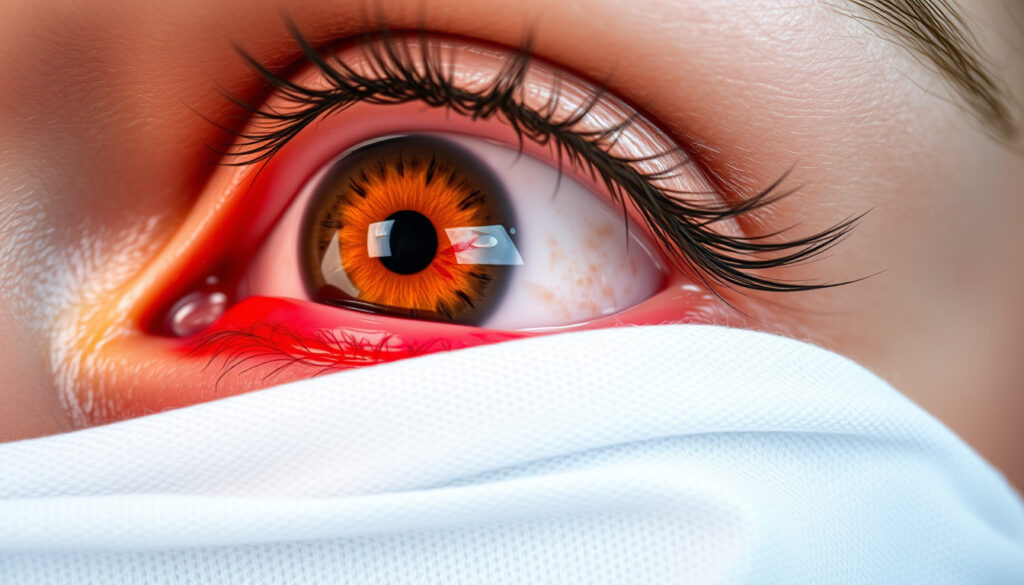
What Causes a Stye? Causes, Quick Treatments, and Prevention
That red, tender bump on your eyelid is annoying—but it’s also a clear signal from your body. A stye is a bacterial infection of one of the tiny oil glands along the eyelid margin, and most people experience at least one in their lifetime.
Annual stye cases: ~1 in 20 people experience a stye · Common cause: Staphylococcus aureus bacteria · Typical duration: 3 to 7 days without treatment · Contagious?: No, styes are not contagious · First-line treatment: Warm compresses applied 3-4 times daily
Quick snapshot
- Stye is caused by bacterial infection (usually Staphylococcus aureus) (Cleveland Clinic)
- Warm compresses are the most effective home treatment (Mayo Clinic)
- Styes are not contagious (HSE Ireland)
- Most styes resolve on their own within a week (Harvard Health)
- The exact role of stress and fatigue in triggering styes (indirect through immune suppression) (Harvard Health)
- Whether dietary factors (e.g., high sugar) increase stye frequency (limited evidence) (Harvard Health)
- Typical stye duration: 3–7 days (Mayo Clinic)
- With warm compresses, improvement often seen within 48 hours (Healthdirect Australia)
- Prevention focuses on good eyelid hygiene (Harvard Health)
- See a doctor if not improved after 1–2 weeks (Cleveland Clinic)
Key facts about styes
| Attribute | Details |
|---|---|
| Condition | Stye (sty) |
| Cause | Infection of oil gland by Staphylococcus bacteria (Cleveland Clinic) |
| Duration | 3–7 days without treatment (Mayo Clinic) |
| Contagious? | No (Healthdirect Australia) |
| First-line treatment | Warm compresses (Harvard Health) |
| Common bacteria | Staphylococcus aureus (Altru Health System) |
| Risk factors | Blepharitis, diabetes, poor hygiene (Nemours KidsHealth) |
| Treatment frequency | Warm compress 2–4 times daily, 5–15 minutes each (Mayo Clinic) |
What can trigger styes?
Styes don’t pop up out of nowhere. The root cause is almost always bacterial, but several everyday factors can increase your odds of developing one. Here’s what the evidence shows.
How does a bacterial infection cause a stye?
- Bacteria—most often Staphylococcus aureus—infect an eyelid oil gland or eyelash follicle (Cleveland Clinic)
- A blocked oil gland filled with oil, dead skin, and bacteria can also form a stye (Nemours KidsHealth)
- The infection triggers inflammation, causing a red, swollen, and tender lump
The eyelid contains dozens of meibomian glands that produce oil to keep the eye lubricated. When a gland’s opening gets clogged, bacteria that normally live on the skin can multiply inside, leading to an infection. That’s the biological chain reaction behind every stye, as explained by Altru Health System.
A stye is essentially a pimple on the eyelid—except it sits in a delicate area where infection can spread more easily if mishandled.
Are stress and being run down direct triggers?
- Stress and fatigue are not direct causes of styes (Harvard Health)
- Chronic stress may weaken the immune system, making it harder to fight off bacterial overgrowth (Harvard Health (stress))
- The link is indirect and not fully established
You may have heard that styes flare up during stressful periods. While that’s a common observation, medical research hasn’t confirmed a direct causal pathway. What’s more plausible: when you’re run down, your immune defenses are lower, allowing bacteria that are already present to gain a foothold. Harvard Health notes that good hygiene and enough sleep may help reduce recurrence, even if stress isn’t a direct trigger.
The implication: stress management helps your immune system, but cleaning your eyelids does more to prevent styes.
Can a dirty pillow or makeup cause a stye?
- Dirty pillowcases and shared towels can transfer bacteria to the eyelid (Specsavers UK)
- Expired or shared eye makeup increases the risk of bacterial contamination (Harvard Health)
- Poor contact lens hygiene is another risk factor (Nemours KidsHealth)
Your face touches your pillowcase for hours every night. Dead skin cells, oil, and bacteria accumulate on fabric, and if you don’t wash cases regularly, that buildup can migrate to the eyelid margin. Similarly, mascara and liquid eyeliner—especially after three months—become breeding grounds for bacteria. Specsavers UK recommends using a fresh towel daily and not sharing flannels.
Replacing eye makeup every 2–3 months can eliminate a major source of bacterial transfer, reducing your stye risk without any extra effort (Harvard Health).
How do you get rid of a stye quickly?
If a stye appears, you want it gone—fast. While there’s no magic bullet, warm compresses are the closest thing to a reliable speed treatment. Here’s what works and what doesn’t.
What kills a stye fast?
- Warm compresses are the fastest home remedy (Mayo Clinic)
- Apply for 5–10 minutes, 2–3 times daily (Mayo Clinic); or 10–15 minutes, 4–6 times daily (Specsavers UK)
- After compressing, gentle massage can help the blockage drain (Harvard Health)
Heat increases blood flow to the area and helps liquefy the hardened oil or pus inside the gland, encouraging natural drainage. The Mayo Clinic Health System confirms that even a few days of consistent compresses can reduce pain and swelling significantly.
No home treatment can reliably eliminate a stye in 5 hours. If you need rapid resolution, medical intervention (incision or antibiotics) may be your only option.
The catch: fast relief comes from consistent heat, not quick fixes.
How to apply a warm compress: step by step
- Wash your hands thoroughly with soap and water.
- Soak a clean washcloth in warm water (not hot—test on your wrist).
- Wring out excess water and hold the cloth over your closed eyelid for 5–10 minutes.
- Repeat this 3–4 times a day until the stye drains or resolves.
- After each compress, gently wipe the eyelid margin with a clean, damp cloth to remove any discharge.
Sources: Mayo Clinic, Healthdirect Australia, Nemours KidsHealth.
The implication: following these steps consistently gives you the best chance of quick healing without complications.
Are there any over-the-counter treatments that work?
- Over-the-counter antibiotic ointments are not typically recommended for styes (Mayo Clinic)
- Prescription antibiotic ointments (e.g., erythromycin) may be used for persistent infections (Cleveland Clinic)
- Never pop or squeeze a stye—it can spread the infection (Mayo Clinic)
Warm compresses remain the first-line treatment because they are safe, free, and effective for the vast majority of styes. Only a doctor should decide if antibiotics are necessary.
How long does an eye stye usually last?
Most styes follow a predictable timeline. Knowing what to expect can help you decide when to wait it out and when to seek help.
What are the beginning stages of an eye stye?
- First signs: redness, swelling, and tenderness on the eyelid margin (Mayo Clinic)
- A small, pus-filled bump appears within 1–2 days
- Watery eyes, crusting, and a scratchy sensation are common
During the first 24–48 hours, the stye swells as the immune system fights the bacteria. The bump may resemble a small pimple, often with a yellowish center. Most styes come to a head and drain on their own within 3–7 days, according to Harvard Health.
The implication: early symptoms are your immune system at work; patience and compresses are your best allies.
When should you see a doctor for a stye?
- If the stye doesn’t improve after 1–2 weeks (Cleveland Clinic)
- If you experience vision changes, severe pain, or swelling spreading to other parts of the face (Healthdirect Australia)
- Fever or redness spreading beyond the eyelid requires immediate medical attention
A stye that lingers beyond two weeks may actually be a chalazion (a non-infectious blocked gland) or may need professional drainage. The Mayo Clinic advises against trying to open it yourself—that can lead to a more serious infection like cellulitis.
The pattern: a persistent stye is a signal to get professional help, not to push harder on home remedies.
Is a stye contagious?
This is one of the most common questions, and the answer has a nuance worth understanding.
Can you spread a stye to someone else?
- Styes themselves are not contagious—the infection is inside the gland (HSE Ireland)
- However, the bacteria (Staphylococcus) can be transferred to others (Healthdirect Australia)
- That bacteria can cause other infections, like conjunctivitis, in another person
Think of it this way: you can’t give someone a stye directly, but you can pass along the bacteria that could later cause one in them—or cause a different type of eye infection. The distinction matters for hygiene practices.
The implication: the infection stays inside your gland, but the bacteria on your hands and linens can travel.
Should you avoid sharing towels or pillowcases?
- Yes—not sharing towels, flannels, and pillowcases reduces bacterial transfer (Specsavers UK)
- Use a clean towel every day while you have a stye
- Wash hands frequently and avoid touching your eyes (Healthdirect Australia)
Good hygiene is the most effective way to contain the bacteria and prevent reinfection or transmission to family members. Nemours KidsHealth recommends daily eyelid cleaning with diluted baby shampoo for those prone to recurrence.
The pattern: bacterial spread is what you control, not the stye itself.
What is the difference between a chalazion and a stye?
Many people confuse these two eyelid lumps, but they have distinct causes and treatments.
How can you tell if it is a stye or a chalazion?
- Stye: red, painful bump at the edge of the eyelid, often with a pus head (Cleveland Clinic)
- Chalazion: firm, painless lump further back on the eyelid, generally larger (Mayo Clinic)
- Styes are infectious; chalazions are not (they are blocked oil glands)
If the bump is tender and right on the lash line, it’s almost certainly a stye. A chalazion tends to be more internal, feels like a hard pea, and rarely hurts unless it presses on the eye.
The implication: pain location tells you whether it’s an infection or a blockage.
Do chalazions require different treatment?
- Both start with warm compresses (Harvard Health)
- Styes may need antibiotic ointment; chalazions sometimes require steroid injections or surgical drainage (Mayo Clinic)
- Chalazions can last weeks to months, while styes typically clear in a week
Because a chalazion is not infected, antibiotics are ineffective. If it doesn’t shrink after several weeks of compresses, a doctor may inject a corticosteroid or make a small incision to drain it. The key: if you’re unsure which you have, see an eye care professional rather than guessing.
The pattern: same first step, different next steps. Know which you have before treating.
Clarity check: what’s known and what’s still unclear
Confirmed facts
- Stye is caused by bacterial infection (usually Staphylococcus aureus) (Cleveland Clinic)
- Warm compresses are the most effective home treatment (Mayo Clinic)
- Styes are not contagious (HSE Ireland)
- Most styes resolve on their own within a week (Harvard Health)
- Do not pop or squeeze a stye (Mayo Clinic)
What’s unclear
- The exact role of stress and fatigue in triggering styes (indirect through immune suppression) (Harvard Health)
- Whether dietary factors (e.g., high sugar) increase stye frequency (limited evidence)
Expert perspectives on styes
“A stye is a painful bump on the edge of your eyelid. Styes form when a blocked oil gland near your eyelashes gets infected.”
Cleveland Clinic (leading US medical center)
“A stye is caused by an infection of oil glands in the eyelid. The bacterium staphylococcus is a common cause.”
Mayo Clinic (US nonprofit medical practice)
“Styes are not contagious. Good hygiene can reduce risk.”
HSE Ireland (Irish government health authority)
A stye is a common, self-limiting infection that usually resolves with simple home care. For most people, the path is straightforward: warm compresses, careful hygiene, and patience. But if the bump doesn’t improve after a week or the pain worsens, a medical consultation can rule out complications like a chalazion or cellulitis. Your eyes are worth the attention – don’t let a home remedy delay needed medical care.
heliooptometry.ca, dmei.org, drmcdevitteyecare.com, moorfields.nhs.uk
Frequently asked questions
Can you wear makeup with a stye?
It’s best to avoid eye makeup until the stye heals completely. Makeup can introduce more bacteria and delay healing (Harvard Health). Replace any mascara or eyeliner used before the stye appeared.
Should you pop a stye?
Never pop or squeeze a stye. It can spread the infection into deeper tissues and cause more inflammation (Mayo Clinic).
Are styes more common in children?
Yes, children are more prone to styes because they often touch their eyes without washing hands first (Nemours KidsHealth). Good hand hygiene is key for prevention.
Can a stye cause vision problems?
A stye itself usually doesn’t affect vision, but significant swelling can temporarily blur vision. If you experience persistent blurriness or eye pain, see a doctor (Mayo Clinic).
What is the best antibiotic for a stye?
Prescription antibiotic ointments such as erythromycin or bacitracin may be used for persistent styes. The choice depends on the type and severity of infection (Cleveland Clinic). Always follow your doctor’s recommendation.
How can you prevent styes from recurring?
Daily eyelid hygiene, washing hands before touching eyes, replacing eye makeup every 2–3 months, and not sharing towels or pillowcases can significantly reduce recurrence (Nemours KidsHealth).
Do warm compresses really work for styes?
Yes – they are the most consistently recommended home treatment. Warm compresses help the stye drain and heal faster by increasing blood flow and softening the blockage. Multiple sources confirm their effectiveness (Mayo Clinic, Harvard Health).
More related posts
 Best Seafood Restaurants in Reykjavik Iceland: Top Guide
 Who Wants to Be a Millionaire 2026: Return & Schedule
 Sky Remote Not Working: Quick Fixes and Reset Steps
 Real Madrid vs Espanyol Lineups: Official XI & 2-0 Win
 Ryanair 40-Minute Rule Fine: What You Need to Know (€100 Penalty)
 Best Galway Hotels with Pool (2025): Family, Spa, City Centre
 Tour de France 2025 Standings: Final Results & Stage Winners
 M & M Direct: Why So Cheap and Can You Trust It
