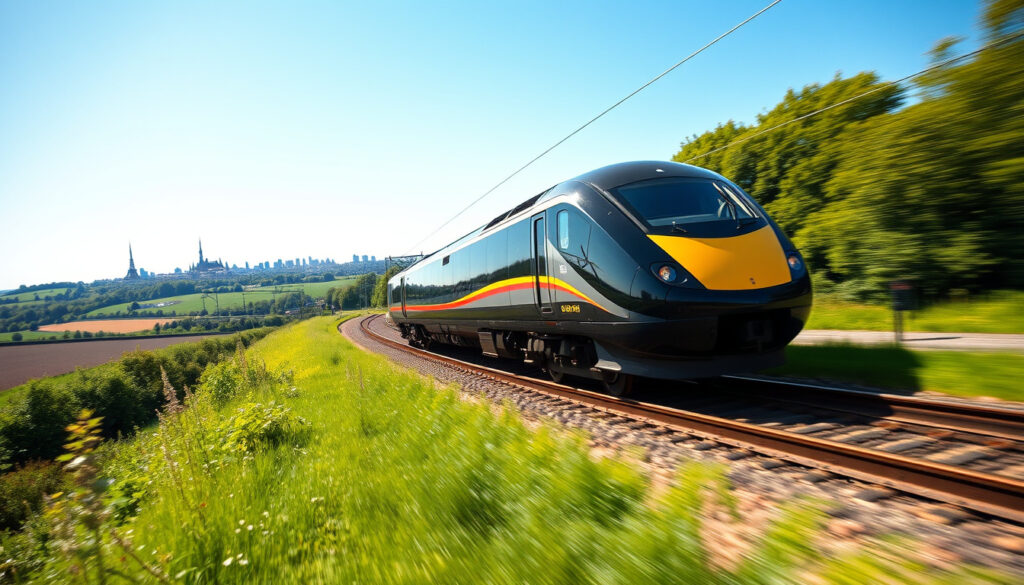
Eurostar London to Paris: Times, Prices & Train Guide
Many travelers automatically assume flying is cheaper than the Eurostar — but that assumption increasingly doesn’t hold up. The high-speed train from London to Paris has captured over 70% of the London-Paris travel market, according to rail experts at Seat61, and it often undercuts flights once you factor in baggage fees and airport transfers. Here’s what the data shows before you book that flight.
Journey time: 2 hours 16 minutes · Starting price: £39 / €44 · Top speed: up to 186 mph
Quick snapshot
- 80% of London-Paris travelers choose Eurostar (Seat61 train travel guide)
- Advance fares from £39 one-way (FlipEarth cost comparison)
- 2 bags included, no weight limit or extra fee (FlipEarth cost comparison)
- Exact cheapest day varies by date
- Peak vs off-peak price variations year-round
- Service launched commercially in 1994
- Market dominance has grown steadily since then
- Book Tuesday or Wednesday for lowest fares
- Arrive 90 minutes early for smooth check-in
| Fact | Detail |
|---|---|
| Duration | 2 hours 16 minutes |
| Distance | approx 280 miles |
| Tunnel length | 31 miles underwater |
| Frequency | Multiple daily |
How much does Eurostar from London to Paris cost?
Tickets start at just £39 one-way when booked in advance, according to travel cost analysis at FlipEarth. That’s competitive with budget flights — until you add what airlines actually charge for extras.
Cheapest tickets from £39
Eurostar releases seats at discounted rates months ahead, and savvy travelers routinely lock in fares under £50. The cheapest return deals typically require a Saturday night stay and booking during off-peak windows on Monday through Thursday or Saturday midday to midnight, as detailed by rail travel experts at Seat61. Last-minute tickets can exceed €350 for a return journey, per Courthouse News reporting on Eurostar pricing.
Factors affecting price
Three variables drive Eurostar pricing: how far ahead you book, the day of the week, and whether you stay Saturday night. Business class and Flexible tickets cost more but allow free rebooking — useful if plans shift.
Is it better to fly or Eurostar to Paris?
The Eurostar takes 2 hours 16 minutes of train time, but door-to-door it’s closer to 3 hours total. A flight takes 1 hour 15 minutes in the air, yet door-to-door runs 3.5 to 5 hours once you add check-in, security, and city transfers, according to time comparisons at FlipEarth.
Time comparison including airports
- Eurostar: 2h16m train + 90 min check-in = ~3 hours total door-to-door
- Flight: 1h15m air + 2h airport prep + 45-75 min city transfer = 3.5-5 hours
- Key advantage: Eurostar departs from St Pancras in central London; flights require travel to Heathrow, Gatwick, or Stansted first
Cost breakdown
Budget airlines advertise fares from £20-30 one-way, but add £20-40 for checked baggage and £15-30 for airport transfers, per FlipEarth’s cost analysis. The true cost of flying often exceeds £100 each way when extras are tallied. Eurostar includes two bags per person with no weight limit and no extra charge — a policy that FlipEarth highlights as a significant advantage.
When airfares spike above €100 round trip, Eurostar typically wins on value. Flights only make sense for ultra-cheap no-extras deals or when you need long-haul connections from Paris CDG or Orly.
| Factor | Eurostar | Flight | Coach |
|---|---|---|---|
| One-way base price | £39+ | £20-30 | £10-20 |
| Door-to-door time | ~3 hours | 3.5-5 hours | 7-10 hours |
| Baggage included | 2 bags, no extra fee | 1 cabin bag free; checked £20-50 | 1-2 bags included |
| On-time performance | 90% within 15 minutes | ~70% | Variable |
| City-center access | St Pancras to Gare du Nord | Airport to city required | Usually Victoria Coach Station |
| Annual passengers | 8 million (2023) | 2 million (to Oct 2023) | Limited data |
The implication: When you add up check-in time, airport transfers, and baggage fees, Eurostar often delivers better value for money than budget airlines advertising cut-rate fares.
Where do you catch the Eurostar from London to Paris?
Eurostar departs from London St Pancras International — a major terminus in the heart of the city — and arrives at Paris Gare du Nord, one of the French capital’s busiest stations, as noted by London Localite. Both stations connect directly to metro systems, making onward travel straightforward.
London St Pancras Int’l details
St Pancras sits on the Underground at King’s Cross St Pancras (six lines including the Northern, Piccadilly, and Victoria). The Eurostar terminal is on the upper level, clearly signposted. The station building itself is worth arriving early for — its Victorian architecture rivals the destination.
Paris Gare du Nord arrival
Gare du Nord connects to Paris Métro lines 4 and 5, plus RER commuter rail toward Disneyland Paris and Charles de Gaulle Airport. It’s a working station — busy, authentic, and thoroughly Parisian. Follow signs for exits based on your onward destination.
Both St Pancras and Gare du Nord sit in central zones, unlike airports which require 45-75 minutes of additional transit each way. For travelers staying near either station, this alone can save an hour or more versus flying.
What day is the cheapest for Eurostar?
Tuesday and Wednesday departures consistently offer the lowest fares, according to booking pattern analysis at Seat61. Sunday tends to be most expensive as weekend leisure travel peaks. Saturday midday-to-midnight windows also offer good deals for weekend trips.
Best booking days
- Tuesday – Wednesday: Lowest demand, cheapest seats
- Saturday 12:00–00:00: Moderate fares for weekend trips
- Monday and Thursday: Mid-range pricing
- Friday – Sunday: Peak demand, highest fares
Off-peak travel tips
Book as early as possible — Eurostar releases seats progressively, and the best discounts disappear first. If your dates are flexible, run a multi-day search to spot the pricing pattern. An off-peak Tuesday departure can save £50 or more versus a Friday evening.
Do you really need to be 90 minutes early for Eurostar?
Eurostar officially recommends arriving 90 minutes before departure, and this isn’t arbitrary — the check-in process includes security screening and passport control for UK-France border crossings, as explained by travel experts at God Save The Points.
Check-in process
- 90 minutes before: Eurostar check-in opens; passport and security screening begins
- 30 minutes before: Final gate call for boarding
- Gate open: Boarding begins like an airport, but without the airport chaos
Security and passport control
Because French border control happens at St Pancras before departure, you complete immigration in London. This means no queues upon arrival in Paris — a significant time saver versus flights where French passport control occurs after landing. God Save The Points notes this as a practical advantage: fewer checks, less waiting.
The 90-minute requirement sounds daunting next to a flight’s 2-hour airport buffer, but Eurostar’s central station location means no travel time to add. Check-in at St Pancras is also typically smoother than airport security — fewer queue surprises, more space, and you can grab coffee in the station’s extensive food hall beforehand.
Eurostar London to Paris travel steps
- Book early: Secure fares from £39 at eurostar.com or authorized retailers. Flexible tickets cost more but allow free changes.
- Pack smart: Two bags per passenger are included. Heavy packers save money versus budget airlines, which charge £20-50 per checked bag.
- Arrive 90 minutes early: Check-in, security, and passport control take time. St Pancras is centrally located — no airport commute.
- Clear French immigration in London: Your passport is stamped before boarding, so no queues on arrival at Gare du Nord.
- Enjoy the journey: WiFi, café-bar, and seats designed for comfort. The Channel Tunnel crossing takes about 20 minutes underwater.
Upsides vs Downsides of Eurostar vs Flying
Upsides
- 3 hours door-to-door beats 3.5-5 hours for flying
- Central London to central Paris — no airport commute
- 2 bags included, no weight limit, no extra charge
- 90% on-time reliability vs ~70% for flights
- French passport control completed before departure
- More relaxed check-in experience than airports
Downsides
- Bookings can exceed €350 last-minute
- Limited to one daily departure for some schedules
- No option for ultra-cheap no-extras deals
- No access to airline loyalty programs for frequent flyers
- Business class premium (£550 return) higher than some airline alternatives
The data makes the pattern clear: Eurostar holds over 70% of the London-Paris travel market because for most people, it’s simply better. The 8 million annual passengers aren’t choosing the train because it’s trendy — they’re choosing it because it gets them there faster, more comfortably, and often more cheaply when baggage and transfers are included, per Courthouse News reporting on passenger trends.
The caveat: when budget airlines drop fares below €40 with no extras needed, flights become genuinely competitive on price. But those deals are unpredictable, while Eurostar pricing is transparent and consistent. Seat61 tracks both options for travelers who want to comparison-shop.
“From central London to central Paris, Eurostar is faster than flying, as well as more comfortable and convenient.”
— Seat61 (Train travel expert)
“The Eurostar is the smarter choice. It’s faster door-to-door, more comfortable, often cheaper when all costs are included, and far better for the planet.”
— FlipEarth (Travel cost analyst)
For travelers weighing London to Paris options, the Eurostar remains the practical default. The only scenarios where flying clearly wins are when airline fares drop to rock-bottom levels or when you need long-haul connections from CDG or Orly airports. Otherwise, the train’s city-center convenience, baggage generosity, and reliability advantage make it the sensible choice for most journeys.
Related reading: Train Dublin to Limerick – Timetable, Fares and Booking Guide
godsavethepoints.com, londonlocalite.com, courthousenews.com, youtube.com, travellingjake.me, klook.com, community.ricksteves.com
Eurostar journeys typically take just over two hours, with fares and schedules mirroring those in the parallel Eurostar timetable for optimal trip planning.
Frequently asked questions
How long does Eurostar from London to Paris take?
The Eurostar takes 2 hours 16 minutes of train time between London St Pancras and Paris Gare du Nord. Door-to-door, plan for approximately 3 hours total when accounting for 90-minute check-in.
Does Eurostar go underwater from London to Paris?
Yes. The train travels through the Channel Tunnel for approximately 31 miles underwater — about 20 minutes of the total journey passes beneath the seabed between England and France.
Is there food on the Eurostar?
Standard class passengers can purchase snacks and drinks from the café-bar carriage. Business and First class passengers receive complimentary meals and drinks as part of their ticket. All passengers may bring food and drinks aboard.
How comfortable are the Eurostar seats?
Eurostar seats are designed for 2-hour-plus journeys, with generous legroom, adjustable backrests, and power outlets at most seats. Standard class rivals short-haul business class on major airlines; Business Premier offers a flatbed option on some services.
What is Eurostar Business class?
Business class (called “Business Premier”) includes complimentary meals, priority boarding, larger seats, extra baggage allowance, and free rebooking. Return fares average around £550, per travel show comparisons. Standard Plus offers a middle tier with slightly larger seats and complimentary light snacks.
How fast is Eurostar London to Paris?
Eurostar trains reach speeds up to 186 mph on the high-speed lines in France and the UK. The average journey speed is lower due to slower sections, but the train completes the trip in 2 hours 16 minutes — faster door-to-door than flying for most travelers.
Can I book Eurostar London to Paris round trip?
Yes. Round-trip tickets are available, though fares vary widely based on booking timing, day of week, and ticket flexibility. One-way fares start from £39; return tickets can range from £78 to over €350 depending on availability and class.
More related posts
 Sean Stapleton Car Sales: Used Cars Borrisoleigh Thurles
 How to Get Rid of a Cold Sore – Fast Effective Treatments
 Can Dogs Eat Peanuts? Safe Amounts, Toxic Nuts & Risks
 Businesses for Sale Ireland: 2026 Guide to Profitable Opportunities
 What Is a UTI? Causes, Symptoms, and Treatment
 Cast of The Wolf of Wall Street: Main Actors and Characters
 Partite di Serie A – 2025/26 Standings, Fixtures, Results
 Live Sports on TV Today: Full Schedule & Channels (2025)
