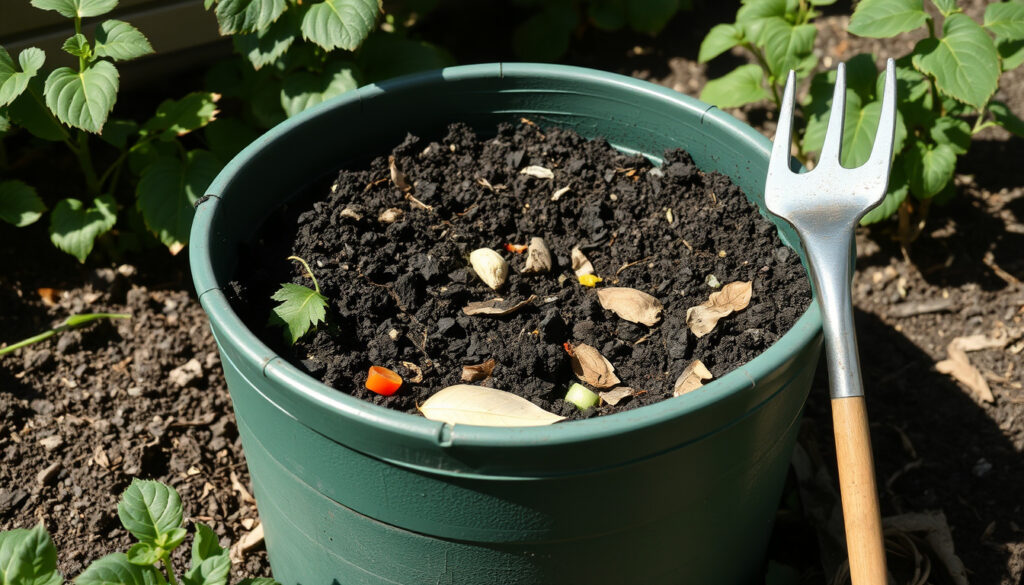
Composting Do’s and Don’ts: A Beginner’s Guide for Home Gardeners
Anyone who’s ever tossed kitchen scraps into a pile and hoped for the best knows composting can feel like a slow, smelly mystery. But the biology is remarkably simple: microorganisms need a balanced diet of carbon-rich browns and nitrogen-rich greens, roughly two to three times more browns by volume, according to US EPA guidance. Get that ratio right, and the rest falls into place—from what to add to what to leave out.
Ideal carbon-to-nitrogen ratio: 25-30:1 ·
Hot compost temperature: 130-150°F (55-65°C) ·
Time to finished compost: 2-12 months depending on method ·
Reduction of household waste: Up to 30% by volume ·
Minimum pile size for hot composting: 3 feet (1 meter) cubed
Quick snapshot
- Meat, dairy, and oils attract rodents and create odors (Iowa State Extension)
- A carbon-to-nitrogen ratio of 25-30:1 is ideal for microbial activity (US EPA)
- Turning the pile every 1-2 weeks speeds decomposition (NYSDEC)
- Whether to place bin directly on soil vs. concrete: both work, but soil contact aids microbial entry
- Optimal bottom layer material: coarse twigs vs. no layer depends on drainage needs
- Hot composting: 2-6 months with regular turning
- Cold composting: 6-12 months with minimal effort
- Compost is ready when dark, crumbly, and smells earthy
- Use finished compost as 1-3 inch top dressing or mix into garden beds
- Some plants (blueberries, rhododendrons) prefer acidic soil and need less compost
These five parameters define the conditions for successful composting.
| Parameter | Target value |
|---|---|
| Optimal pile size | At least 3 ft x 3 ft x 3 ft for hot composting |
| Ideal moisture level | 40-60% – squeeze test: a few drops of water |
| Carbon-to-nitrogen ratio | 25-30 parts carbon to 1 part nitrogen |
| Average decomposition temperature | 130-150°F (55-65°C) in active pile |
| Time to cure | 1-2 months after cooling |
What is the first rule of composting?
The first rule is deceptively simple: maintain a proper balance of nitrogen-rich greens and carbon-rich browns. The USDA’s home composting guide recommends a ratio of 2 to 3 parts brown material to 1 part green material by volume. Greens—food scraps, fresh grass clippings, coffee grounds, and manure—supply nitrogen. Browns—dry leaves, straw, wood chips, and shredded paper—supply carbon. Microbes burn carbon for energy and use nitrogen to build proteins; skew the ratio too far either way and decomposition stalls.
Balance greens and browns for the right carbon-to-nitrogen ratio
- Green materials include vegetable scraps, grass clippings, coffee grounds, and fresh weeds (NYSDEC definition).
- Brown materials include fallen leaves, dry weeds, shredded paper, wood chips, and straw (NYSDEC definition).
- Aim for roughly 2-3 parts browns to 1 part greens by volume, not weight.
Avoid common mistakes: too wet, too dry, wrong materials
- A pile that smells bad usually lacks air or has too much moisture, according to CalRecycle’s troubleshooting guide.
- A pile that will not heat up may be too dry, too small, low in nitrogen-rich material, or made of particles that are too large (CalRecycle).
Why this matters: Nearly every odor or slowdown in a backyard pile traces back to an imbalance. Getting the ratio right from the start eliminates most troubleshooting later.
What should I put in the bottom of my compost bin?
The base of your bin sets the stage for airflow and drainage. A common question among beginners is whether to add a special layer or just dump everything in.
Layering the base for aeration and drainage
- Add a 4-6 inch layer of coarse browns—twigs, straw, or wood chips—at the bottom to improve airflow and drainage.
- Direct soil contact underneath allows microorganisms and worms to enter the pile (RHS composting advice).
- Avoid putting a solid barrier at the bottom; soil contact is beneficial.
What to start your compost bin with
- Some people add a layer of finished compost or garden soil as a microbial starter.
- Alternating layers of greens and browns as you fill the bin encourages even decomposition.
The trade-off: A coarse base layer helps with aeration but can dry out the pile faster if your climate is already dry. Adjust based on your local conditions.
What are 5 items that should not be composted?
Knowing what to keep out is just as important as knowing what to toss in. The list of banned materials is surprisingly consistent across every major extension service.
Meat, dairy, and oils
- Meat scraps, bones, fish, whole eggs, and dairy products decompose slowly, cause odors, and attract rodents, warns Iowa State Extension.
- Fats, oils, and grease create the same problems and should go in the trash (US EPA).
Diseased plants and weeds
- Plants with visible disease and weeds that have gone to seed should not be added unless your pile reaches 150-160°F (Iowa State Extension).
- Invasive perennial weeds like bindweed or quackgrass can survive cool composting.
Dog and cat waste
- Pet feces and spent cat litter may contain parasites harmful to humans and should never go in a home compost pile (Iowa State Extension safety note).
Coal ash and treated wood
- Coal ash contains heavy metals; treated wood has chemical preservatives. Both are listed as prohibited by the US EPA.
Herbicide-treated plants
- Plants or grass clippings treated with herbicides can persist through the composting process and damage your garden later (US EPA).
The five no-go categories—meat/dairy, diseased plants, pet waste, coal ash, and herbicide-treated material—are off-limits for the same reason: they either introduce pathogens, heavy metals, or persistent chemicals that end up in your garden soil.
The pattern: Every banned item either attracts pests, survives compost temperatures, or contains something toxic. When in doubt, leave it out.
How deep should my compost pile be?
Size directly affects temperature, and temperature drives decomposition speed. A pile that is too small won’t heat up; one that is too large becomes hard to turn and may go anaerobic in the center.
Minimum depth for hot composting
- Iowa State Extension states the best enclosed backyard compost pile is between 3 feet by 3 feet by 3 feet and 5 feet by 5 feet by 5 feet.
- A pile that is too big or too small is a common mistake to avoid (Iowa State Extension).
Depth for cold or lazy composting
- Cold piles can be smaller but need at least 2-3 feet in each dimension to function adequately.
- Trench composting and sheet composting require no pile depth—you bury or spread materials directly in the garden.
Turning and layering strategies
- The USDA recommends monthly turning as a good rule of thumb.
- Turning every 1-2 weeks speeds decomposition and prevents matting (NYSDEC).
A 3-foot cube is the sweet spot for hot composting: big enough to retain heat, small enough to turn easily. Drop below 2 feet and you lose the thermophilic (heat-loving) bacteria entirely.
Why this matters: Pile depth is the single most underestimated variable for beginners. A pile that never heats up usually just needs more volume.
Do I just put compost on top of soil?
Once your compost is dark, crumbly, and smells like earth, you have options. How you apply it depends on what you are growing and what season it is.
Using compost as a top dressing or mulch
- Finished compost can be spread as a 1-3 inch layer on top of soil as mulch, according to the US EPA.
- It can also be mixed into garden beds or potting soil to improve structure and fertility.
Which plants benefit from compost
- Most vegetables, flowers, and lawns respond well to a 1-2 inch top dressing.
- Some plants—blueberries, rhododendrons, azaleas—prefer acidic conditions and do not need heavy compost application.
How long until compost is ready to use
- Compost is ready when it is dark, crumbly, and smells earthy—typically 2-6 months for hot methods, 6-12 months for cold methods.
- Unfinished compost can tie up nitrogen in the soil if mixed in too early; better to use it as a top layer until fully cured.
The catch: Applying thick layers of unfinished compost on soil can create anaerobic pockets. Patience pays: wait until the pile looks and smells like soil before spreading it around your plants.
Steps for building your first compost pile
Here is a straightforward sequence to get started, adapted from USDA guidance and NYSDEC recommendations.
- Choose a dry, level site in sun or partial shade, with good drainage (USDA).
- Set up a bin or designate a heap—a 3-foot cube is ideal for hot composting.
- Layer 4-6 inches of coarse browns at the bottom for aeration.
- Add alternating layers of greens and browns, aiming for 2-3 parts browns to 1 part greens.
- Moisten each layer so the pile feels like a wrung-out sponge—40-60% moisture.
- Turn or mix the pile every 1-2 weeks to introduce oxygen (NYSDEC).
- Monitor temperature for hot piles: 130-150°F signals active decomposition.
- Let it cure for 1-2 months after the pile cools before using the compost on garden beds.
Not everyone wants to turn a pile. Cold composting—just piling greens and browns and waiting 6-12 months—works fine for low-effort gardeners. The trade-off is slower results and a higher chance of weed seeds surviving.
What this means: The method you choose determines your timeline and effort. Hot composting gives you finished compost in one season; cold composting asks for patience but very little labor.
What we know and what is still uncertain
Confirmed facts
- Adding meat to compost attracts rodents and creates odors (Iowa State Extension).
- A carbon-to-nitrogen ratio of 25-30:1 is ideal for microbial activity (US EPA).
- Turning the pile increases oxygen and speeds decomposition (NYSDEC).
- Home composting can reduce household waste volume by up to 30%.
What’s unclear
- Whether to place compost bin directly on soil vs. on a concrete surface: both work but soil contact aids microbial entry.
- Optimal bottom layer material: twigs vs. no layer depends on site-specific drainage needs.
- Effectiveness of commercial compost accelerators vs. a shovelful of garden soil.
“Don’t add meat scraps, bones, grease, whole eggs, or dairy products to the compost pile because they decompose slowly, cause odors, and can attract rodents.”
— Iowa State Extension
“The best location for a compost bin is a sheltered spot in partial or full shade, to avoid extremes of temperature and moisture.”
For the home gardener in any climate, the choice between hot and cold composting is not about right or wrong—it is about how much time and attention you can give. Hot composting delivers faster results and kills weed seeds and pathogens. Cold composting demands almost nothing beyond piling and waiting, but the finished product may still contain viable weed seeds. The trade-off is clear: speed for effort, or patience for ease.
environment.sa.gov.au, fieldreport.caes.uga.edu, beaufortcountysc.gov, uchealth.org, 19january2021snapshot.epa.gov, ccetompkins.org, dec.ny.gov
Frequently asked questions
Can I compost weeds?
Only weeds that have not gone to seed and are not invasive; avoid perennial weeds like bindweed or quackgrass in cold piles. If your hot pile reaches 150-160°F, most weed seeds will be killed (Iowa State Extension).
Can I compost citrus peels?
Yes, in moderation. Citrus peels are acidic but decompose well when mixed with plenty of browns. Avoid adding a large volume of peels all at once, as the acidity can temporarily slow microbial activity.
Do I need a compost bin?
No, you can create an open heap or use a tumbler. Bins help contain materials and retain heat, but an uncovered pile works fine in many climates (USDA).
Can I compost paper and cardboard?
Yes, shredded non-glossy paper and cardboard (with tape removed) are excellent browns. They add carbon and help balance wet kitchen scraps (NYSDEC).
Should I turn my compost?
Turning aerates the pile, speeds decomposition, and prevents bad odors. Aim for every 1-2 weeks for hot composting, or monthly as a minimum (USDA).
What is a compost accelerator?
Products or natural additives—garden soil, finished compost, or commercial inoculants—that introduce microorganisms to jumpstart the process. Most home composters get the same effect by adding a shovelful of existing compost or garden soil.
Can I put banana peels in my compost?
Yes, banana peels are a great green material. Tear them into smaller pieces to speed decomposition. They add potassium to the finished compost.
What plants don’t like compost?
Acid-loving plants such as blueberries, rhododendrons, azaleas, and camellias prefer soil with lower pH and do best with minimal or well-aged compost applied sparingly.
More related posts
 Married at First Sight Australia 2025: Couple Updates
 Holiday Centre Santa Ponsa: Reviews, Location & What to Know
 Love Holidays Discount Code: How to Save with Verified Deals
 Homestore and More Galway: Hours, Phone, Specials & Clearance
 What Is a Content Pillar? Definition and Examples
 Cast of Law & Order: Special Victims Unit – Bios & Facts
 Met Office Yellow Thunderstorm Warning: What It Means
 Train Dublin to Limerick – Timetable, Fares and Booking Guide
