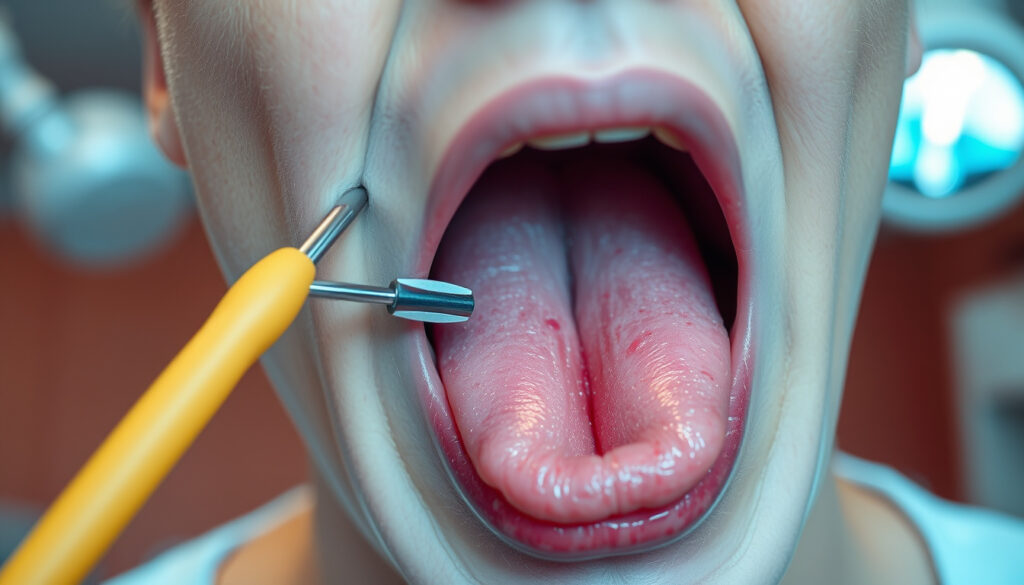
White Spots on Tonsils: Causes, Treatment, When to See a Doctor
Those white spots on your tonsils can be alarming, but they are rarely a medical emergency. In the next five minutes, we’ll walk through the most common reasons behind those spots, when you can treat them at home, and when it’s time to call a doctor.
| Snapshot | Details |
|---|---|
| Prevalence | Tonsillitis and related infections are common, especially in children and young adults. |
| Incubation | Varies by cause; strep throat typically 2-5 days, mononucleosis can be 4-6 weeks. |
| Contagiousness | Highly contagious for bacterial (strep) and viral (cold, flu, mono) causes. |
| Duration | Viral infections may last 3-7 days; bacterial (untreated) can linger; with antibiotics 12-24 hours to improve. |
| Complications | Untreated strep can lead to rheumatic fever; peritonsillar abscess is a rare but serious risk. |
| Diagnosis | Clinical exam; rapid strep test or throat culture for bacterial confirmation. |
Those little spots are a signal, not a sentence. Understanding the difference between a common cold and strep throat is the first step toward finding relief and avoiding unnecessary antibiotics.
What Does It Mean When You See White Spots on Your Tonsils?
White spots on the tonsils (clinically called tonsillar exudate) are a visual clue that your immune system is fighting something. They are a sign of inflammation or infection, not a disease in themselves. Several different conditions can cause them, from a minor viral cold to a bacterial infection requiring antibiotics.
The Viral Majority
- Most tonsillitis cases (up to 70%) are viral, according to eMedicineHealth. These include adenoviruses, Epstein-Barr virus (the cause of mono), and even the common cold.
- Symptoms often include a cough, runny nose, hoarseness, and sometimes conjunctivitis (pink eye).
- Antibiotics are ineffective against viruses; treatment focuses on rest, fluids, and pain relief.
When a virus is the culprit, white spots might be just one of several symptoms. The cough and runny nose are giveaways that it’s not a straightforward bacterial issue.
Viral tonsillitis is self-limiting, meaning it resolves on its own, but it’s also highly contagious. Practicing good hand hygiene is crucial to prevent spreading it.
The down side of viral spots is that they can look dramatic while your immune system works, but they don’t typically require medical drugs.
The Bacterial Usual Suspect: Strep Throat
- Strep throat, caused by Group A Streptococcus, is a leading bacterial cause of white spots on tonsils.
- Unlike a viral cold, strep often arrives without a cough or runny nose. Instead, you might have a sudden sore throat, fever over 100.4°F (38°C), swollen lymph nodes, and difficulty swallowing.
- It’s most common in children aged 5 to 15, but anyone can get it.
Strep is where the distinction between spotting and treating becomes critical. Antibiotics like penicillin or amoxicillin are necessary to clear it and prevent complications like rheumatic fever, which can damage heart valves. The white spots in strep are often accompanied by redness and swelling, and they may look like thick, patchy exudates.
If your predominant symptom is a painful sore throat without a cough, it’s worth a visit to the doctor for a rapid strep test. That quick swab can give you an answer in minutes.
The implication: antibiotics clear the infection within 24-48 hours of starting treatment, significantly reducing your contagious period and speeding recovery.
What Else Could It Be? The “Other” Causes
While viruses and strep account for most cases, other bacterial infections and non-infectious conditions can also cause white spots on the tonsils. It’s not just about treating the spot; it’s about treating the underlying condition.
Beyond the Usual Suspects
- According to Health.com, if the spots are accompanied by severe fatigue, fever, and swollen lymph nodes, it could be mononucleosis, caused by the Epstein-Barr virus.
- It’s common in teenagers and young adults, often called the “kissing disease”. (Health.com)
- There’s no specific treatment, just symptom management and rest. (Health.com)
- These are calcified accumulations of debris in the tonsil craters (crypts). They look like small white or yellowish lumps. (My Health Devon NHS)
- They’re not usually an infection, but they can cause bad breath, a feeling of something stuck in your throat, and an irritating cough, as noted by My Health Devon NHS.
- Often, they come out on their own when you cough or gargle. (My Health Devon NHS)
- This is a yeast infection in the mouth that can spread to the tonsils, looking like cottage cheese curds. It’s more common in infants, the elderly, and people with weakened immune systems or those using asthma inhalers.
- It requires an antifungal medication, not an antibiotic.
- If you have white patches that are also on your tongue or cheeks, that’s a strong hint it’s thrush, not strep.
- While uncommon, according to Healthline, a persistent one-sided white spot or an ulcerated area that doesn’t heal could be a sign of a more serious condition like squamous cell carcinoma (tonsil cancer).
- Other rare causes include leukoplakia (a pre-cancerous white patch), syphilis, and in extremely rare cases, a peritonsillar abscess (a collection of pus near the tonsil). (Healthline)
- If you have a muffled voice, difficulty breathing, or drooling (especially in kids), seek immediate medical attention. (Healthline)
Interestingly, the distinction between viral and bacterial is often the single most important piece of information a doctor will determine. The presence of a cough strongly suggests a viral cause, while a fever without a cough points toward strep.
When evaluating your own risk, watch for escalation. If your symptoms don’t quite fit — a spot that persists for weeks, or a severe one-sided headache — that’s a flag. It doesn’t mean panic, but it does mean seek a professional diagnosis.
When to See a Doctor: The Diagnosis Is Key
| Indicator | Symptom / Situation | Action |
|---|---|---|
| Routine Check | Mild sore throat with white spots, no fever, no cough. | Home care: warm fluids, saltwater gargle, rest. Watch for 48 hours. |
| See a Doctor | White spots with fever >100.4°F(38°C), no cough, difficulty swallowing, swollen neck glands. | Get a rapid strep test or throat culture to determine if antibiotics are needed. |
| Emergency | Difficulty breathing, muffled voice, excessive drooling, severe pain on one side, or a spot that doesn’t improve after 1-2 weeks. | Seek immediate medical attention. These could signal a peritonsillar abscess or, rarely, cancer. |
| Persistent Case | Spots that last longer than a week or recur frequently. | See an ENT to rule out chronic tonsillitis or tonsil stones causing the problem. |
While salt water and honey can help you feel better, they are not a solution if you have strep. The infection will persist and can lead to complications. A single swab can give you a definitive answer, transforming a guessing game into a treatment plan.
Without treatment, the risk is that a bacterial infection like strep can trigger a serious inflammatory response. The pattern: prioritize a visit to the doctor when unsure — it’s the safest bet for your health.
Soothe the Symptoms, Not (Necessarily) the Infection
Figuring out whether you need a doctor versus a box of throat lozenges comes down to a practical question: what are the other symptoms?
- Saltwater gargle: Mix 1/2 teaspoon of salt in a glass of warm water. Gargle every 3-4 hours to reduce swelling and pull out debris.
- Hydration and warmth: Drink warm liquids like herbal tea with honey or lemon. They coat the throat and ease pain.
- Over-the-counter pain relievers: Ibuprofen or acetaminophen can reduce fever and inflammation, making symptoms manageable while the body fights off the virus.
- Lozenges and hard candy: These stimulate saliva production, which naturally helps flush the tonsils and keeps the throat moist.
Note: while these remedies soothe, they don’t shorten the duration of a bacterial infection. If strep is confirmed, taking the full course of antibiotics is non-negotiable, even if you feel better after two days.
The paradox is that the most dramatic looking spots are often the most harmless in terms of severity. A viral tonsillitis can look angry and white but clear up without drugs, while a slow-growing, symptomless patch might be a sign of a more complex issue.
The implication for you: pay attention to your body. If you’re tired of a cycle of sore throats, a doctor’s visit can break that cycle. For now, most of you will just need a good night’s sleep and a few days of TLC.
nhs.uk, medicalnewstoday.com, businessinsider.com, mayoclinic.org, my.clevelandclinic.org, mayoclinic.org, webmd.com, scer247.com
Frequently asked questions
Can white spots on tonsils be a sign of cancer?
It is extremely rare, but yes. According to Healthline, a persistent, one-sided spot or ulceration that doesn’t heal could be a sign of tonsil cancer. However, this is considered a rare cause, and it typically presents alongside other symptoms like an enlarged lymph node on one side, ear pain, or a feeling that something is stuck in your throat. If your spot lasts more than a week or two without a diagnosis, it is worth a check.
Is strep throat the only cause of white spots on tonsils?
No. Strep is a common cause, but not the only one. Health.com notes that other bacterial infections and, more often, viruses like the common cold or mononucleosis can cause them too. Non-infectious causes like oral thrush (a yeast infection) or tonsil stones are also common.
White spots on tonsils but no sore throat: is that possible?
Yes, and it often points to a non-infectious or less severe cause. According to eMedicineHealth, if you have white spots but no pain or fever, it might be tonsil stones (which can be painless) or even a mild case of oral thrush.
Can I get rid of white spots on tonsils without antibiotics?
That depends entirely on the cause. If the spots are due to a virus, your doctor will not prescribe antibiotics, as they don’t work against viruses. Home care like saltwater gargles, fluids, and rest is the standard course. If the cause is strep (bacterial) or oral thrush (fungal), you will need a specific prescription to eliminate it.
How do I know if my white spots are strep throat or a common cold?
The key differentiators are the presence of a cough and runny nose. Strep throat typically does not cause a cough; it features a severe sore throat, fever without a cough, and often swollen lymph nodes. A cold will bring a cough, sneezing, and a runny nose. If you’re unsure, a visit to a doctor for a rapid strep test can provide a definitive answer within minutes.
Are there any home remedies that cure tonsil stones causing white spots?
Home remedies can help manage the symptoms and sometimes dislodge the stones, but they don’t “cure” the underlying tendency to form them. Gentle gargling with warm salt water can help dislodge stones, and staying hydrated prevents the debris that forms them. However, if they are large, painful, or cause bad breath (halitosis) that won’t go away, an ear, nose, and throat specialist might need to remove them.
Related reading
If you found this guide helpful and want to explore related topics, you might be interested in understanding a specific medical card issue. For practical information on managing your health coverage, take a look at: Medical Card Phone Number: HSE Contact & Renewal Guide.
More related posts
 M&S Liffey Valley: Opening Hours, Store Info & Ireland Closures
 Homestore and More Galway: Hours, Phone, Specials & Clearance
 Manchester United vs Real Sociedad: Head-to-Head Record
 How Much Is a Labubu? Official vs Resale Prices 2025
 Il Caffè di Napoli – Recipe, History, Cuccuma Guide
 How to Get Rid of a Cold Sore – Fast Effective Treatments
 Best Places to See Autumn Leaves Japan: 2026 Guide
 Best Rooftop Bars Near Me: Top Dublin Rooftop Bars & Views (2026)
