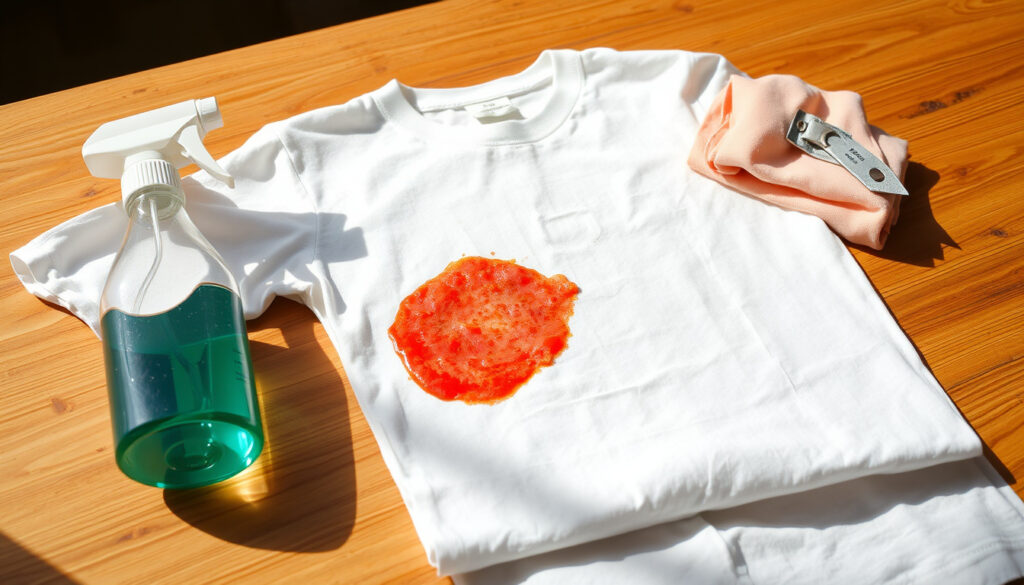
How to Remove Sauce Stains from Clothes and Surfaces
Anyone who’s ever splashed pasta sauce on a favorite shirt knows the sinking feeling. That bright red stain seems to set in seconds. But getting it out — whether from fabric, plastic, or even a painted wall — is often simpler than you’d think, especially when you know the right technique for each surface. This guide breaks down the exact steps, backed by university research and cleaning experts, so you can tackle fresh and dried tomato sauce stains with confidence.
Cold water rinse: First step for fresh stains (University of Nebraska-Lincoln Extension) ·
White vinegar solution: Effective within 15–30 minutes (University of Nebraska-Lincoln Extension) ·
Oxygen bleach soak: 4–6 hours for set-in stains (The Spruce)
Quick snapshot
- Cold water outperforms hot on fresh tomato stains (University of Nebraska-Lincoln Extension)
- Dish soap breaks down the oil in tomato sauce (DG Floors)
- Oxygen bleach lifts set-in stains effectively (The Spruce)
- Toothpaste as a tomato stain remover: no credible source confirms efficacy
- Commercial stain removers vary widely by brand and fabric blend
- Pre-treat dried stains with oxygen bleach soak before washing (The Spruce)
- Never dry until the stain is completely gone (The Spruce)
The pattern is clear: the right first step depends on whether the stain is fresh or dried, and the surface material determines the safest method.
| Fact | Value |
|---|---|
| First step for fresh stains | Cold water rinse within 5–10 minutes |
| Most effective household product | Dish soap or oxygen bleach |
| Time for vinegar to work | 15–30 minutes |
| Avoid on tomato stains | Hot water until stain is fully removed |
| Best source method | Prewash + hottest safe water (University of Nebraska-Lincoln Extension) |
| Critical warning | Avoid drying until stain is gone (The Spruce) |
How do you get sauce stains out of clothes?
Steps for fresh tomato sauce stain removal
- Blot excess sauce with a paper towel — do not rub.
- Run cold water through the back of the stain for 30 seconds (University of Nebraska-Lincoln Extension).
- Apply a drop of liquid dish soap directly to the stain and work in a circular motion with your fingers.
- Let it sit for 10 minutes, then rinse with cold water.
- Wash in the hottest water safe for the fabric (check care label).
Using dish soap and cold water on sauce stains
- Mix 1 tablespoon clear dish soap, 1 tablespoon white vinegar, and 2 cups cold water (DG Floors).
- Apply with a clean cloth from the outside inward for 10–15 minutes.
- Rinse and check before washing.
For fresh stains, dish soap and cold water are your first line of defense. The oil in tomato sauce is the real culprit — dish soap cuts through it better than laundry detergent alone.
The pattern: fresh stains respond to immediate cold water and dish soap, while dried stains require a longer soak. Heat sets the stain, so avoid hot water until the stain is gone.
Does white vinegar remove tomato sauce stains?
How to use vinegar on tomato stains
- Sponge the area with a 1:1 vinegar-water solution (University of Nebraska-Lincoln Extension).
- Blot gently — do not saturate the fabric.
- Rinse after 15–30 minutes. For white cotton, a longer soak is safe.
Vinegar soaking time for best results
- For set-in stains: soak in 1:1 vinegar and water for 20–30 minutes (On Better Living).
- For stubborn residue: follow the vinegar soak with a laundry detergent wash.
- Test on colored fabric first — vinegar can fade some dyes.
Vinegar works best on set-in stains when combined with detergent, but avoid on colored fabrics without testing. The acid can lift the stain, but it may also lift the fabric dye.
The trade-off: vinegar is a mild, food-safe option, but it’s not as powerful as oxygen bleach on dried pigment. For old stains, vinegar alone may not be enough.
How to remove dried tomato sauce stains?
Pre-treatment for dried sauce stains
- Scrape off any crusted residue.
- Apply a prewash stain remover (like Shout or Spray ‘n Wash) directly to the stain.
- Let it sit for 15 minutes before laundering (The Spruce).
Using oxygen bleach on old stains
- Mix 1 scoop of oxygen bleach (e.g., OxiClean) in 1 gallon of cool water (DG Floors).
- Soak the garment for 4–6 hours, or overnight for heavy stains.
- Wash in warm water with regular detergent.
- Do not dry until the stain is completely gone — heat sets it permanently (Alibaba Spice Basics).
Heat can permanently set remaining pigment. Never put the item in the dryer until the stain is completely gone. If the stain remains after washing, repeat the soak — do not dry.
The implication: dried tomato stains are stubborn because the pigment has bonded with the fabric. Oxygen bleach breaks that bond chemically, but it needs time. Rushing the process by using heat locks the stain in for good.
What is the best stain remover for tomato sauce?
OxiClean and oxygen-based removers for tomato
- Oxygen bleaches are effective on both fresh and set-in stains (The Spruce).
- They are color-safe for most fabrics when used as directed.
- Works best when soaked for 1–8 hours depending on stain age.
Dishwasher detergent method
- Apply a small amount of powdered dishwasher detergent directly to the damp stain.
- Rub gently and let sit for 15 minutes.
- Rinse thoroughly — dishwasher detergent contains stronger enzymes than dish soap (Reddit cleaning community).
The best remover depends on the fabric and stain age. For white cotton, oxygen bleach is the gold standard. For colored fabrics, a color-safe oxygen bleach is safer. Dishwasher detergent is a heavy-duty alternative, but test on an inconspicuous area first.
How to remove tomato sauce stains from different surfaces?
Remove tomato stain from plastic or Tupperware
- Make a paste of baking soda and water, rub onto the stain.
- For stubborn stains, soak in a diluted bleach solution (1 tsp bleach per cup of water) for 15 minutes — rinse thoroughly.
- Alternatively, use a paste of dish soap and baking soda, let sit for 30 minutes.
Remove tomato sauce stain from colored shirt
- Use color-safe oxygen bleach (e.g., OxiClean Color Shield) — test on a hidden area first.
- Soak for 1 hour, then wash in cold water.
- Avoid vinegar on dark colors; it can cause fading (The Spruce).
Remove tomato sauce stains from painted walls
- Mix 1 teaspoon liquid dish soap in 1 quart of warm water, add 1/4 teaspoon white vinegar (Tom’s Guide).
- Dip a soft cloth, wring out excess, and blot the stain — do not scrub.
- Wipe with a damp cloth to remove soap residue.
- For stubborn stains on glossy paint, use a bleach-and-water solution (1 tbsp bleach per quart of water) — avoid on matte finishes (StainWiki).
The implication: each surface demands a different approach. Plastic can handle bleach, but painted walls need a gentle touch. Colored shirts require extra caution. What works for one surface can ruin another.
Expert perspectives on tomato sauce stain removal
“Sponging with a vinegar solution is effective for tomato-based stains on clothing. Follow with a prewash treatment and launder in the hottest water safe for the fabric.”
— University of Nebraska-Lincoln Extension
“For set-in barbecue sauce stains, soak in a mixture of oxygen bleach and water for one to eight hours, or overnight. Never dry until the stain is completely gone.”
— The Spruce
“I’ve had great luck with dishwasher detergent applied directly to tomato sauce stains. Rub it in, let it sit, then wash normally.”
— Reddit cleaning community user
For anyone dealing with a fresh tomato sauce spill, the choice is clear: act within minutes with cold water and dish soap, or face a longer battle with oxygen bleach. For colored fabrics, always test first. And for painted walls, gentle blotting beats scrubbing every time. Internal resources like the Shark Steam and Scrub Review can help with deep-cleaning surfaces, while food-related cleanup often goes hand‑in‑hand with kitchen prep tips such as how to bake potatoes in the oven for crispy skin — a meal that often leads to those same sauce stains.
askjeevesny.com, nobroker.in, homestyler.com, bobvila.com, wow1day.com
Frequently asked questions
Can you use bleach on tomato sauce stains?
Chlorine bleach is effective on white cotton and other bleach-safe fabrics, but it can damage colored fabrics and some synthetic blends. Always test on a hidden area first. Oxygen bleach is a safer alternative for most fabrics.
How do you get tomato sauce stains out of white clothes?
For white cotton, use an oxygen bleach soak (1 scoop per gallon of cool water) for 4–6 hours, then wash in hot water. For stubborn stains, apply a paste of baking soda and hydrogen peroxide, let sit for 30 minutes, then launder.
Is it safe to use vinegar on colored clothes?
Vinegar can fade some fabric dyes, especially on dark or bright colors. Test on an inconspicuous area first. For colored clothes, color-safe oxygen bleach is a more reliable option.
What removes old tomato sauce stains from Tupperware?
A baking soda paste rubbed into the stain works well. For persistent stains, soak in a diluted bleach solution (1 tsp bleach per cup of water) for 15 minutes, then rinse thoroughly. Avoid bleach on colored plastic.
Does baking soda remove tomato stains?
Yes, baking soda is a mild abrasive and can lift fresh tomato stains from fabric and plastic. Make a paste with water, apply to the stain, let sit for 15–20 minutes, then rinse. It’s less effective on dried or set-in stains.
How to prevent tomato sauce stains from setting?
Act quickly: blot excess sauce, run cold water through the stain, and apply dish soap. Do not use hot water or put the item in the dryer until the stain is completely removed. Heat sets the stain permanently.
More related posts
 Manchester United vs West Ham: Latest Results & Guide
 Irish Baby Girl Names: 150+ Traditional, Rare, & Modern
 Car Sales Near Me: Top Used Car Dealers in Dublin [2025]
 Niamh Farrell GAA Catfish – What Really Happened
 Boylesports Roulette Results Today Live – How to Access Results
 Newcastle vs Crystal Palace: TV, Postponement & H2H
 Can Dogs Eat Peanuts? Safe Amounts, Toxic Nuts & Risks
 Kpop Demon Hunters Colouring Pages – Free Printable Collections for Fans
