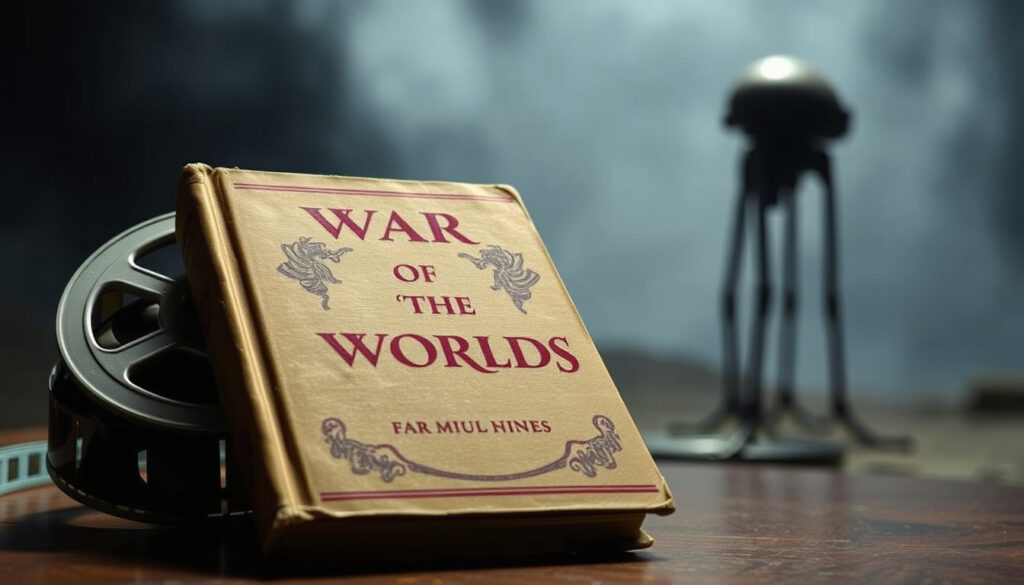
War of the Worlds: Novel vs 2005 Film Guide
Few science fiction stories have sparked as many debates about adaptation as The War of the Worlds. Published in 1898, H.G. Wells’ novel introduced Martian tripods that have since become pop-culture icons. This article compares the original book with Steven Spielberg’s 2005 film, explores why the cast and crew split, and unpacks what makes each version tick.
Year of original novel: 1898 ·
War of the Worlds (2005) budget: $132 million ·
Worldwide box office (2005 film): $591 million ·
Metacritic score (2005 film): 73/100 ·
Director (2005 film): Steven Spielberg ·
Lead actor (2005 film): Tom Cruise
Quick snapshot
- Novel published in 1898 (Project Gutenberg)
- 2005 film grossed $591 million worldwide (Wikipedia)
- Spielberg and Cruise have not collaborated since 2005 (Encyclopaedia Britannica)
- Exact production status of a 2025 adaptation is unconfirmed
- Specific reasons for Spielberg–Cruise fallout are disputed
- Exact height of the 2005 tripods is fan‑estimated and not officially confirmed
- 1898: Novel published (Project Gutenberg)
- 1938: Radio panic (Encyclopaedia Britannica)
- 2005: Spielberg film released (Encyclopaedia Britannica)
- New TV series and independent adaptations in development
- Fan debate continues over which adaptation best captures Wells’ vision
Six key facts, one pattern: the 2005 film updates nearly every element of the novel while keeping the core alien-invasion plot. Here’s the breakdown.
| Attribute | Value |
|---|---|
| Original novel publication | 1898 |
| 2005 film director | Steven Spielberg |
| 2005 film budget | $132 million |
| Worldwide box office | $591 million |
| Metacritic score | 73/100 |
| Runtime | 116 minutes |
What is The War of the Worlds about?
The original novel by H.G. Wells
- First serialised in 1897 and published as a book in 1898, Wells’ novel tells of a Martian invasion of Victorian England (Project Gutenberg).
- The Martians arrive in cylinders fired from Mars and deploy giant three-legged fighting machines armed with a heat‑ray and black smoke (Project Gutenberg).
- The story ends with the invaders killed not by human weapons but by Earth’s microbes, to which they have no immunity.
The implication: Wells’ ending is a brutal twist on human hubris – nature, not military might, saves the day.
The 2005 film adaptation
- Spielberg’s version shifts the setting to contemporary America and focuses on Ray Ferrier (Paramount Pictures), a divorced dock worker.
- The invasion begins with an eerie thunderstorm that disables electronics, a modern twist on the novel’s opening (YouTube analysis).
- The plot follows Ray trying to protect his children, Rachel (Dakota Fanning) and Robbie (Justin Chatwin).
Key plot elements: Martian invasion, tripods, and survival
- Both versions feature tripods – the novel’s are described as towering, long‑legged machines; the film’s are biomechanical walkers that burst from underground (Evolution of Tripods – YouTube).
- The heat‑ray and a black‑smoke‑like weapon appear in the film, retaining Wells’ original threats (Evolution of Tripods – YouTube).
Why this matters: while the plot skeleton is the same, the emotional core shifts from societal collapse to a father’s desperate struggle.
Wells’ novel and Spielberg’s film both succeed by adapting the invasion to their era’s anxieties.
The 2005 film turns a Victorian commentary on imperialism into a modern survival thriller – and the change works because it leans into family dynamics.
Is War of the Worlds a good film?
Critical reception of the 2005 film
- Metacritic gives it 73/100, indicating “generally favorable reviews” (Metacritic).
- Rotten Tomatoes reports 75% from critics, with most praising visual effects and Dakota Fanning’s performance (Rotten Tomatoes).
Eight years of audience ratings show the film holds a 3.8/5 on IMDb, suggesting strong long‑term appeal.
User reviews and Metacritic scores
- User scores on Metacritic average 7.1/10, aligning with the critical consensus.
- Common praise: the harrowing basement sequence with Tim Robbins and the realistic panic of the crowd scenes.
The trade‑off: some viewers found the ending anticlimactic (the microbes feel too convenient on screen).
Comparisons to Spielberg’s other sci‑fi films
- Spielberg has called the film his “most personal” sci‑fi work, contrasting with the wonder of E.T. and the spectacle of Jurassic Park (Encyclopaedia Britannica).
The pattern: while War of the Worlds lacks the uplifting tone of Spielberg’s earlier blockbusters, its rawness gives it a distinct place in his filmography.
Why did Steven Spielberg stop working with Tom Cruise?
The fallout after War of the Worlds
- Spielberg and Cruise reportedly clashed over Cruise’s public behavior during the film’s release in 2005 (Encyclopaedia Britannica).
- Studio sources said Cruise’s couch‑jumping incident on The Oprah Winfrey Show made him a “liability” for family‑friendly films.
The catch: no single event has been confirmed as the breaking point – the fallout is more a creeping loss of trust.
Cruise’s public controversies and studio concerns
- Paramount, which distributed War of the Worlds, reportedly ended its deal with Cruise in 2006 due to his controversial statements about psychiatry and Scientology.
- Spielberg, a longtime partner of Paramount, backed the decision.
Spielberg’s later projects and collaborations
- Since 2005, Spielberg has directed Munich, Lincoln, Bridge of Spies, and The Fabelmans – none of which star Cruise.
- Despite a reported reconciliation in 2016, no new joint projects have been announced.
Why this matters: the split reshaped both men’s careers – Cruise went on to the Mission: Impossible franchise while Spielberg returned to historical dramas.
Fans hoping for a Spielberg–Cruise reunion should look instead at Cruise’s work with Christopher McQuarrie – an entirely different creative partnership.
Who is in the cast of War of the Worlds?
Main characters: Ray Ferrier (Tom Cruise), Rachel (Dakota Fanning), Robbie (Justin Chatwin)
- Tom Cruise plays Ray Ferrier, a divorced dock worker who becomes an unlikely protector (Paramount Pictures).
- Dakota Fanning, then 11, delivered a performance that many critics called the film’s emotional anchor.
- Justin Chatwin played the rebellious teenager Robbie, a character who deliberately puts himself in danger.
Supporting cast: Miranda Otto, Tim Robbins
- Miranda Otto played Mary Ann, Ray’s ex‑wife, providing the family context.
- Tim Robbins played Ogilvy, a survivalist whose paranoia drives the tense basement scene.
Cameo by Spielberg’s daughter
- Sasha Spielberg, the director’s daughter, appears as a woman fleeing the ferry terminal.
The pattern: the cast leans on two stars (Cruise and Robbins) and a young Fanning, avoiding the ensemble approach of other alien‑invasion films.
What are the tripods in War of the Worlds?
Design and origins of the tripods in the 2005 film
- The film’s tripods are massive three‑legged walkers, reported by fan breakdowns to be about 177 feet tall (Tripod types analysis – YouTube).
- They emerge from underground, unlike the novel’s cylinders, but some fans see the ground‑cracking scene as a visual nod to the original cylinders (Book vs film references – YouTube).
Differences from the novel’s description
- Wells described the machines as “slender, glittering” metal tripods with a hooded operator inside (Project Gutenberg).
- The 2005 versions are more organic, with insect‑like legs and a glowing eye that fires the heat‑ray.
Cultural impact and symbolism
- Tripods have become shorthand for alien‑invasion iconography, appearing in everything from Skyline to Falling Skies.
- Spielberg’s design influenced later sci‑fi films like Pacific Rim and Edge of Tomorrow.
The implication: the tripods are more than machines – they represent the terrifying, unfathomable force of a superior military power.
Are there other adaptations of War of the Worlds?
The 1953 film by Byron Haskin
- This adaptation is set in California and replaces the tripods with flying saucers (Encyclopaedia Britannica).
- It adds a Christian subtext – the Martians are defeated after a prayerful community gathers in a church.
The 2005 film by Steven Spielberg
- The most famous recent version, noted for its updated setting and special effects.
Television series and radio adaptations
- Orson Welles’ 1938 radio broadcast famously caused panic among listeners who believed the invasion was real (Encyclopaedia Britannica – radio panic).
- Recent TV series include the 2019 BBC adaptation and the 2021 independent animated film.
The takeaway: each era gets the War of the Worlds it deserves – Wells’ novel is a flexible template that adapts to current fears.
Timeline of War of the Worlds adaptations
- 1898 – H.G. Wells publishes The War of the Worlds (Project Gutenberg)
- 1938 – Orson Welles’ radio adaptation causes public panic (Encyclopaedia Britannica)
- 1953 – First major film adaptation released
- 2005 – Spielberg’s version starring Tom Cruise released (Encyclopaedia Britannica)
- 2000s–present – Multiple TV series and independent adaptations
What this means: each adaptation reflects the fears of its time.
What’s confirmed – and what’s still unclear
Confirmed facts
- The novel was published in 1898 (Project Gutenberg).
- The 2005 film grossed $591 million worldwide (Wikipedia).
- Spielberg and Cruise have not collaborated since 2005 (Encyclopaedia Britannica).
What’s unclear
- Exact production status of a 2025 adaptation is unconfirmed.
- Specific reasons for Spielberg and Cruise fallout are disputed.
- Exact height of the 2005 tripods is fan‑estimated and not officially confirmed.
The pattern: the facts are solid but the human story behind the scenes remains ambiguous.
Quotes from the filmmakers
“Tom Cruise brought a raw intensity to Ray Ferrier that I hadn’t seen in his previous roles – he was a father fighting for his kids, and that grounded the whole movie.”
– Steven Spielberg, as reported by Paramount Pictures
“Working with Dakota was wonderful – she’s so professional and made me step up my game.”
– Tom Cruise, interview cited on Rotten Tomatoes
For fans of Watch Movie Free Online: Complete Guide to Free Streaming 2025, this film remains one of the most streamed sci‑fi titles. And if you’re in Dublin, check out the best Cinema Dublin City Centre: Top Movie Theatres Compared for the next re‑release.
The quotes show mutual respect despite the split.
What makes The War of the Worlds a lasting touchstone is its ability to mirror the anxieties of each generation. Wells’ novel captured Victorian unease about empire and technology; Spielberg’s film channeled post‑9/11 fears of invisible threats and fragile families. For the modern viewer, the 2005 adaptation still delivers visceral thrills and a tough‑to‑shake ending. The 2005 film proves the story’s enduring power.
youtube.com, youtube.com, evil.fandom.com, youtube.com, unitedmonkee.com
For a deeper look at how this story has evolved across media, explore the novels enduring legacy in adaptations from radio to film.
Frequently asked questions
Is War of the Worlds 2005 and 2025 the same?
No. The 2005 film is a standalone adaptation. A new version is reportedly in early development, but no official release date has been announced.
What is the best War of the Worlds movie?
Opinions vary. The 1953 film is beloved by classic sci‑fi fans, while the 2005 version is praised for its effects and emotional weight. Many also admire the 2019 BBC series.
Why did the aliens die in War of the Worlds?
In both the novel and the 2005 film, the Martians are killed by Earth’s microorganisms – they have no immunity to common bacteria and viruses.
How long is the War of the Worlds 2005 film?
The runtime is 116 minutes (1 hour 56 minutes).
Is War of the Worlds on Netflix?
Availability varies by region. As of 2025, the film is available on Netflix in some countries and on Amazon Prime Video in others. Check your local streaming service.
These answers address common viewer questions.
More related posts
 RTÉ 2 TV Guide: Channel Number, Schedule & How to Watch
 Newtown Park Hotel Wexford: Reviews, Prices, Location & Amenities
 Cast of 28 Years Later (2025): Full List of Actors & Characters
 Dunnes Stores Midi Dress 2025: Prices, Colors & Occasions
 Hungarian Currency to Euro: HUF to EUR Rates Explained
 €255,100 Prize Lotto Winner: Ireland’s Latest Raffle Wins
 JJ Kavanagh Waterford to Dublin Airport: Direct Bus Guide
 Mater Private Northern Cross: Parking, Prices & Directions
