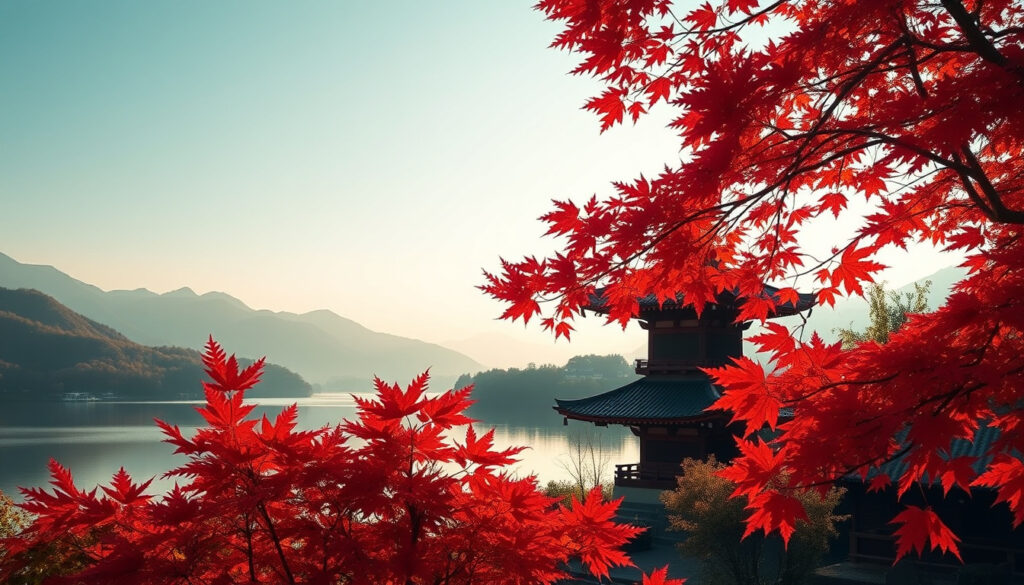
Best Places to See Autumn Leaves Japan: 2026 Guide
There’s a reason Japan’s autumn foliage draws visitors from around the world: the shifting colors arrive like a slow wave, starting in the northern mountains of Hokkaido and rolling south over three months. For anyone planning a trip in 2026, the key is matching your travel dates to the right region — because Tokyo in October looks nothing like Tokyo in late November.
Koyo season: Mid-September to early December ·
Peak month: November ·
First peak region: Hokkaido (Daisetsuzan) ·
Typical Tokyo high in October: About 22°C ·
Usual Tokyo foliage peak: Late November to early December
Quick snapshot
- Hokkaido: mid-September to early October (Japan Life Lab).
- Nikko and Japanese Alps: late October to early November (Japan Life Lab).
- Kyoto and Tokyo: November peak (Self Guide Japan).
- Hokkaido for earliest color (Odynovo Tours).
- Nikko for easy access from Tokyo (Japan Life Lab).
- Kyoto for temple gardens (Japan Highlights).
- Gardens: Rikugien, Koishikawa Korakuen (Hidden Japan Gems).
- Ginkgo avenues: Meiji Jingu Gaien. (Hidden Japan Gems)
- Day trips: Nikko, Mount Takao, Okutama (Japan Life Lab).
- Confirm the 2026 forecast once published.
- Use a koyo map to spot regional peaks.
- Go early in the day to avoid crowds.
Five key facts about Japan’s autumn foliage season, drawn from Japan Life Lab travel planning guide and Self Guide Japan Tokyo travel resource:
| Fact | Value |
|---|---|
| Koyo season length | Roughly 3 months, from mid-September to early December |
| Usual peak month | November for most of Honshu |
| First peak region | Hokkaido (Daisetsuzan) |
| Tokyo’s typical peak | Late November to early December |
| Kyoto’s typical peak | Mid-to-late November |
The pattern: these five facts define the planning framework for a 2026 koyo trip.
When to see autumn leaves in Japan in 2026?
The 2026 koyo season is expected to follow the familiar north-to-south progression, but with a twist: a Kanko Map foliage forecast resource suggests peaks could arrive 3 to 7 days later than usual because of a warm year. That means planning around typical windows and then verifying with the official forecast once it’s published.
When to not visit Japan in 2026?
- Golden Week (late April to early May) — crowds are extreme everywhere.
- Obon (mid-August) — domestic travel spikes.
- Late November to early December in Kyoto — peak foliage but also peak tourist density.
Source: Japan Life Lab seasonal travel guide
How do you plan an autumn-foliage trip in 2026?
- Decide your region first: Hokkaido for September/October, central Japan for November, Kyushu for December.
- Check the 2026 official forecast (usually released in September) for prefecture-level peak dates.
- Book accommodations 3–6 months ahead if you’re targeting Kyoto or Nikko during peak.
- Build in flexibility: a 2–3 day window per destination lets you chase the best color.
Travelers who lock in their region early and monitor the Hidden Japan Gems live koyo tracker as the season approaches get the most reliable color — and avoid the disappointment of arriving a week too early or too late.
The implication: a flexible itinerary built around verified forecasts gives koyo travelers a decisive advantage over bulk bookers.
Which part of Japan is best to visit in October?
October offers the most reliable color in the north, while central Japan is still mostly green. Here’s where the early action is.
Is October too early for Tokyo or Kyoto?
- Tokyo and Kyoto are generally still green in early October, with color developing in November (Japan Highlights travel planning).
- Tokyo’s average high in October is about 22°C, which feels warm but comfortable for sightseeing.
Which October regions have the earliest color?
- Hokkaido: Sapporo and Jozankei are at peak in mid-October (Japan Life Lab).
- Tohoku: Oirase Gorge and Lake Towada peak mid-to-late October (Japan Life Lab).
- Nikko: Oku-Nikko peaks around October 5–10, with Lake Chuzenji and Kegon Falls following October 18–November 1 (Japan Life Lab).
The pattern: October belongs to Hokkaido, Tohoku, and the highlands of Nikko. If you’re set on Tokyo or Kyoto, wait until November.
What this means: an October traveler who heads north gets peak color; one who stays in Tokyo gets comfortable weather but green trees.
Can you see fall foliage in Japan in November?
November is the main foliage month for central Japan. By the time November arrives, Hokkaido is mostly finished, but Kyoto, Tokyo, and Nikko are entering their prime.
Where does November foliage peak in Japan?
- Kyoto temple gardens: mid-to-late November (Japan Life Lab).
- Tokyo parks: late November to early December (Self Guide Japan).
- Nikko: early to mid-November is the peak for lowland temples and Lake Chuzenji.
- Hiroshima and Miyajima: mid-to-late November (Japan Life Lab).
What should I pack for a November foliage trip?
- Layers: daytime highs in Kyoto/Tokyo are around 15–18°C, but evenings drop to 8–10°C.
- Comfortable walking shoes — temple gardens and mountain trails require them.
- An umbrella or light rain jacket (November precipitation is moderate).
November is the sweet spot for central Japan’s foliage, but it’s also the busiest month for international tourists. Booking 6 months ahead is no longer early — it’s prudent.
The catch for November travelers: peak color comes hand-in-hand with peak crowds, so early booking is not optional.
Where is the best place in Japan to see autumn foliage?
There is no single best place — the answer depends entirely on when you’re traveling. The usual top tier includes Hokkaido, Nikko, the Fuji Five Lakes, and Kyoto. But choosing by region and peak week beats choosing one national winner.
Which is the prettiest city in Japan?
- Kyoto is often called Japan’s autumn capital because of its temple-and-garden settings such as Kiyomizu-dera, Eikando, Tenryu-ji, and Nanzen-ji (Japan Highlights).
- Kyoto’s peak is typically mid-to-late November, a few days later than the national norm (Japan Life Lab).
What is koyo?
- Koyo ( ) is the Japanese term for autumn leaves, literally “red leaves.”
- Momiji ( ) specifically refers to maple trees.
- The koyo front is the north-to-south wave of color that moves across Japan each autumn.
“The Japan National Tourism Organization recommends travelers follow the koyo front from north to south for the best viewing experience.”
Japan National Tourism Organization official tourism board
The pattern: your travel month dictates the best region, not the other way around.
Is Tokyo better in October or November?
Tokyo’s foliage peak is late November to early December. October is warmer and less crowded, but the leaves are still green. November offers the color but brings shorter daylight and more visitors.
Three key differences, one pattern: October favors comfort, November favors color.
| Factor | October | November |
|---|---|---|
| Foliage status | Mostly green, early color at high elevations | Peak color in parks and gardens |
| Average high | 22°C (comfortable for sightseeing) | 16°C (cool, need layers) |
| Crowds | Moderate | High (peak tourist season) |
| Daylight | ~11 hours | ~10 hours |
| Best for | Exploring the city without foliage crowds | Photography and garden visits |
The trade-off: October gives you better weather and fewer people, but you’ll miss the color.
Is Tokyo too hot in October?
- No — October highs average 22°C, with lows around 15°C (Japan Life Lab).
- It’s warm enough for a light jacket, not hot enough for air conditioning.
When do Tokyo maple and ginkgo leaves peak?
- Maple (momiji) peak: late November to early December (Self Guide Japan).
- Ginkgo peak: typically early December, a bit later than maples.
- The Tokyo Convention & Visitors Bureau gives a citywide autumn-leaf viewing period of mid-November to early December (Real Japan Guide Tokyo tourism resource).
What this means for the October traveler: you trade autumn color for comfortable sightseeing; for most first-time visitors, late November remains the sweet spot.
Where to go for autumn leaves in Tokyo?
Tokyo has a mix of public gardens, ginkgo avenues, and nearby nature escapes. Here are the top spots, organized by type.
What are the best gardens in Tokyo to see autumn leaves?
- Rikugien: a classic landscape garden with a central pond and maples, peak November 15–December 10 (Hidden Japan Gems live tracker).
- Koishikawa Korakuen: a historic garden with a mix of maples and ginkgo, similar peak window.
- Shinjuku Gyoen: large park with a Japanese garden section, good for families.
What are the best day trips from Tokyo for autumn foliage?
- Nikko: the classic day trip, with Oku-Nikko peaking early October and Lake Chuzenji in late October. The train from Tokyo takes about 2 hours (Japan Life Lab).
- Mount Takao: a 1-hour train ride, with easy hiking trails and a temple. Peak in early November.
- Okutama Valley: a 2-hour journey, with river views and forest trails. Peak in early to mid-November.
“Nikko’s autumn foliage is one of the top day-trip destinations from Tokyo, with a peak window that spans from early October at high elevations to early November around the lake.”
Japan Life Lab travel planning guide
The catch for day-trippers: Nikko’s high-elevation peaks arrive in early October, while Tokyo’s gardens peak a full month later, so timing the right day trip is essential.
Steps to plan your 2026 autumn foliage trip
- Choose your travel window — are you traveling in October, November, or December? This determines which region to target.
- Select a primary region — Hokkaido for early color, central Japan (Kyoto/Tokyo) for November, Kyushu for December.
- Monitor the 2026 official forecast — once released (usually September), adjust your itinerary by a few days if needed.
- Book accommodations early — especially in Kyoto, Nikko, and popular onsen towns. 3–6 months ahead is recommended.
- Plan day trips — from Tokyo, Nikko and Mount Takao are easy options. From Kyoto, consider Arashiyama and Kurama.
- Pack smart — layers, comfortable shoes, and a camera with a good zoom lens for the best shots.
Even with perfect planning, weather can shift peak dates by a week. The best strategy is to build in a 2-day buffer at each destination and use a live koyo tracker with community-reported updates to chase the best color in real time.
2026 autumn foliage timeline
Here’s the expected north-to-south progression of Japan’s koyo front in 2026, based on Japan Life Lab forecast guide and Odynovo Tours forecast map:
- Mid-September 2026 — Earliest color appears in Daisetsuzan National Park, Hokkaido.
- Early October 2026 — Hokkaido and Tohoku are at peak; Tokyo and Kyoto are still green.
- Late October 2026 — Nikko and the Japanese Alps approach peak; central Japan starts changing.
- Early November 2026 — Kyoto and Tokyo begin showing color; Nikko is near peak.
- Mid-to-late November 2026 — Kyoto and Tokyo reach peak foliage; key time for city gardens.
- Early December 2026 — Tokyo ginkgo and late maples still visible; the season winds down.
The implication: a traveler who follows this timeline from north to south can catch peak color across three months.
Confirmed facts vs. what’s unclear
Confirmed facts
- Japan’s autumn leaves progress from north to south.
- Hokkaido is the earliest reliable autumn-foliage region.
- Kyoto and Tokyo are major late-season koyo destinations.
- November is within the peak window for most of central Japan.
What’s unclear
- Exact 2026 peak dates depend on summer and autumn temperatures.
- Official 2026 foliage forecasts will update peak windows as the season approaches.
- Specific Tokyo garden peak dates are weather-dependent and can shift by a week or more.
“The 2026 autumn foliage season is expected to peak 3 to 7 days later than usual due to a warm year, according to a nationwide forecast.”
For travelers, the implication is clear: plan around the typical windows but remain flexible. The official forecast, when released, will be the best guide.
Related reading: Tokyo Autumn Leaves 2026 · Japan Autumn Foliage Koyo Guide 2026
japanfallfoliagemap.pplx.app, umetravel.com, matcha-jp.com, michi-japan.group, besttimetovisitjapan.cc
Frequently asked questions
How long does autumn foliage season last in Japan?
Roughly 3 months, from mid-September in Hokkaido to early December in Kyushu. The peak for most of Honshu (Tokyo, Kyoto, Nikko) is November.
Are autumn leaves in Japan worth planning a trip around?
Absolutely — the koyo season is one of Japan’s most beautiful natural events. The combination of temple gardens, mountain landscapes, and city parks makes it a unique travel experience.
What is the best way to reach Nikko from Tokyo?
Take the JR Tohoku Shinkansen to Utsunomiya (50 minutes), then transfer to the Nikko Line (45 minutes). Total travel time about 2 hours. Alternatively, direct buses from Tokyo’s Asakusa station take about 2.5 hours.
Should I book accommodation early for Japan’s autumn foliage season?
Yes — especially in Kyoto, Nikko, and popular onsen resorts. Booking 3–6 months ahead is recommended to secure your first choice.
Can I see both Tokyo and Kyoto in one autumn foliage trip?
Yes, the Shinkansen connects Tokyo and Kyoto in 2.5 hours. Plan 4–5 days in each city, and time your visit for late November to catch both peaks.
Do I need to rent a car for autumn leaf viewing in Japan?
Not usually — public transport in Japan is excellent. Trains and buses serve most major koyo spots. A car can be useful for rural areas like the Japanese Alps, but it’s not essential.
For more detailed planning, refer to our Japan Autumn Foliage Koyo Guide 2026 and Tokyo Autumn Leaves 2026 guides.
More related posts
 Kelly and Dollard Waterford: Reviews, Hours, Appliances
 White Lotus Season 1: Killer, Meaning & Ending Explained
 The Summer I Turned Pretty Season 3: Release & Episodes
 Olivia Dean Man I Need Lyrics: Meaning & Gospel Version
 BrookLodge & Macreddin Village: Wicklow Organic Spa Hotel
 Marks & Spencer Cyber Incident: What Happened, Impact, and Recovery
 How to Connect Alexa to Wi-Fi: Full Setup & Troubleshooting
 Dunnes Stores Dun Laoghaire: Hours, Closure, Salaries & More
