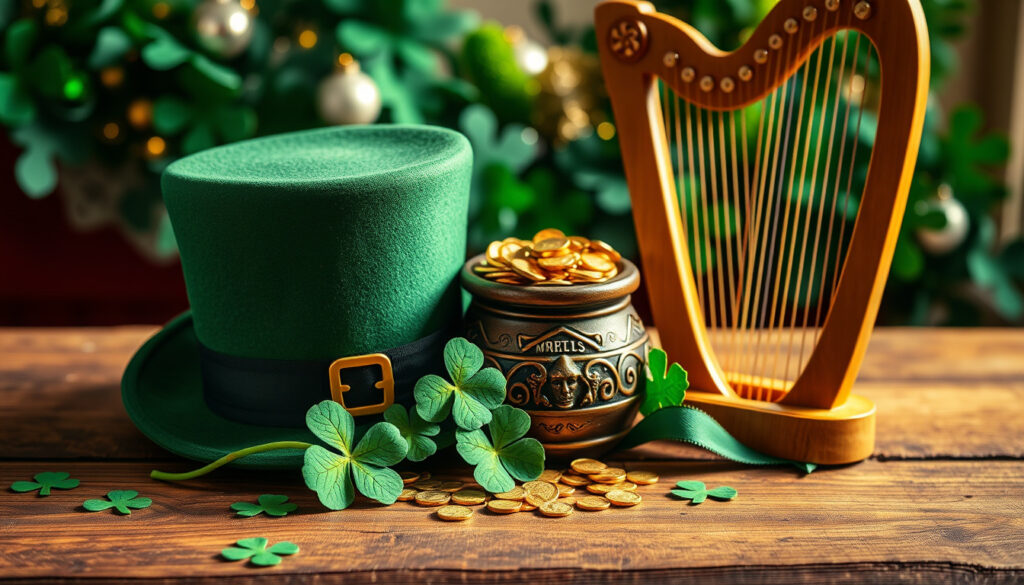
St. Patrick’s Day: History, Symbols, and Traditions
March 17 fills American streets with green beer and plastic shamrocks, while in Ireland the same date still carries a quieter, older religious weight. This is the story of how St. Patrick’s Day evolved from a 5th-century missionary’s feast day into a global celebration — and why the Irish and American versions are not the same holiday.
Annual celebration date: March 17 · Commemorates: Saint Patrick, patron saint of Ireland · First parade in United States: 1737 in Boston · Estimated annual participants in Dublin parade: Over 500,000
Quick snapshot
- St. Patrick’s Day is observed on March 17, the feast day of St. Patrick (Encyclopaedia Britannica (reference work))
- The first recorded U.S. parade took place in New York City in 1762 (Smithsonian National Portrait Gallery (museum))
- Shamrock is a recognized symbol of the holiday (HISTORY (editorial publisher))
- Ireland made St. Patrick’s Day a public holiday in 1903 (Library of Virginia (government archive))
- Exact year of Saint Patrick’s death (circa 461 AD) (Encyclopaedia Britannica (reference work)) (National Geographic (science and culture magazine))
- Whether Saint Patrick actually used a shamrock to explain the Trinity (HISTORY (editorial publisher)) (National Geographic (science and culture magazine))
- Precise origin of the phrase “Kiss me, I’m Irish” (National Geographic (science and culture magazine))
- Whether the often-cited 1737 Boston parade actually occurred; the first recorded U.S. parade is dated to 1762 in New York City (Smithsonian National Portrait Gallery (museum)) (National Geographic (science and culture magazine))
- 5th century: Saint Patrick brings Christianity to Ireland (Encyclopaedia Britannica (reference work)) (Dublin City Council (municipal government))
- 1737: First U.S. parade in Boston (traditional date; first recorded parade is 1762 in New York City) (Smithsonian National Portrait Gallery (museum)) (Dublin City Council (municipal government))
- 1903: Declared a public holiday in Ireland (Library of Virginia (government archive)) (Dublin City Council (municipal government))
- 1960s: Chicago River dyed green for the first time (National Geographic (science and culture magazine)) (Dublin City Council (municipal government))
- 2025: Dublin parade draws over 500,000 spectators (Dublin City Council (municipal government))
- St. Patrick’s Festival 2026 in Dublin continues the “Eachtraí” (Adventures) theme (St Patrick’s Festival (official festival body))
- Irish tourism expects another record year for March visits (St Patrick’s Festival (official festival body))
- Growing global awareness of Irish language and culture beyond the holiday (St Patrick’s Festival (official festival body))
The snapshot leaves one tension: the holiday’s most visible symbols are well documented, but the man behind them stays partly in legend. The table below compresses the key numbers into one reference line.
| Label | Value |
|---|---|
| Date observed | March 17 (fixed date) |
| Saint Patrick’s death year | circa 461 AD |
| First parade | 1737 in Boston, Massachusetts (traditional date; first recorded in 1762 in New York City) |
| National holiday in Ireland since | 1903 |
| Estimated number of Irish diaspora | over 70 million worldwide |
Why is St. Patrick’s Day celebrated?
Who was Saint Patrick?
Saint Patrick was a 5th-century Christian missionary credited with bringing Christianity to Ireland. According to Encyclopaedia Britannica (reference work), he was born in Roman Britain, kidnapped and enslaved in Ireland as a teenager, and later returned as a missionary. His own account, the Confessio, describes his life and mission. The holiday commemorates his death on March 17, which became his feast day.
Saint Patrick’s story — a former slave who became a patron saint — is a genuine historical figure, not a myth. But the legends that surround him, like driving snakes out of Ireland, are later additions that have little evidence.
What is the religious origin of the holiday?
St. Patrick’s Day originally centered on religious feasts and services before becoming a broader secular celebration of Irish culture, especially in the United States (Encyclopaedia Britannica). In Ireland, it was a quiet holy day for centuries — a break from Lent, with families attending church and eating a special meal. The shift to a public holiday in 1903 (Library of Virginia) marked the beginning of its modern public face.
The pattern: the religious observance gave way to a civic celebration shaped by Irish immigrants abroad, particularly in America. The trade-off: the solemnity of the original feast is often lost in the party atmosphere.
What are the three symbols of St. Patrick’s Day?
The shamrock: meaning and history
The shamrock is one of the best-known symbols of St. Patrick’s Day and is tied to Irish identity (HISTORY). A longstanding tradition says Patrick used the three-leaf clover to explain the Christian Trinity, though historians note this story may have emerged centuries later (HISTORY).
The leprechaun: folklore and commercialization
Leprechauns originate from Irish folklore as solitary fairies who make shoes and hide treasure. Today, they appear on everything from cereal boxes to costume hats — a far cry from the mischievous, cobbling spirits of old tales. The commercialization of the leprechaun is a classic example of American marketing overlaying traditional Irish mythology.
The color green and its significance
The color traditionally associated with St. Patrick was blue, not green (HISTORY). Green later became associated with Ireland through nationalism and cultural pride, particularly during the 18th and 19th centuries. Wearing green on March 17 became a symbol of Irish identity, especially for the diaspora. The tradition of pinching those who don’t wear green is an American invention, not an Irish custom.
The color that defines St. Patrick’s Day today — green — was not the saint’s own color. It was politics and emigration that turned the feast day green.
What this means: each symbol carries a different layer — faith, folklore, or politics — and the weight shifts depending on whether you are in Dublin or Boston.
What color is bad luck on Saint Patrick’s Day?
Why is wearing orange avoided in Ireland?
In Northern Ireland, the color orange is strongly associated with Protestantism and the Unionist tradition, while green represents Irish nationalism and Catholicism. Wearing orange on St. Patrick’s Day can be seen as a political statement rather than a fashion choice. The avoidance is not about superstition but about historical and political sensitivity.
What is the historical reason for the orange color?
The orange color traces back to William of Orange, the Protestant king who defeated the Catholic James II in the 1690s. The Orange Order, founded in 1795, celebrates his victory with parades on July 12. In contrast, St. Patrick’s Day is a green holiday. The Irish tricolor flag — green, white, orange — symbolizes peace between the two traditions, but on March 17, green dominates.
What this means: the “bad luck” associated with orange is a culturally specific taboo, not a universal superstition. In the United States, wearing orange is perfectly fine; in parts of Ireland, it’s a loaded choice.
Is St. Patrick’s Day bigger in Ireland or America?
Scale of celebrations in the United States
The first recorded St. Patrick’s Day parade in the United States took place in New York City in 1762 (Smithsonian National Portrait Gallery). Today, the New York City parade draws over 2 million spectators, making it the largest St. Patrick’s Day parade in the world. American celebrations also include green-dyed beer, corned beef and cabbage, and elaborate decorations — many of which have no Irish equivalent.
Scale of celebrations in Ireland
The 2025 National St. Patrick’s Day Parade in Dublin took place on Monday, 17 March 2025 at 12 pm, with over half a million spectators and 4,000 participants (Dublin City Council). The official theme was “Eachtraí” (Adventures), emphasizing community and inclusion (St Patrick’s Festival). While the parade is large, the holiday in Ireland is a single day of celebration, not a multi-week season. For visitors interested in Irish culture year-round, a visit to the Museum of Literature Ireland (MoLI) (cultural institution) offers a deeper look at the nation’s literary heritage.
How do Irish people feel about American St. Patrick’s Day?
Many Irish people view American celebrations as commercialized but generally welcome the attention. The Irish Times notes that the American version has become a separate tradition, with its own foods and customs (The Irish Times (Irish newspaper)). The gap is clear: in Ireland, the day remains a public holiday with a family-oriented parade; in America, it’s a sprawling cultural festival. For Irish tourism operators, the American enthusiasm is a boost — the Travel Department Ireland (Irish owned tour operator) sees a surge in March bookings from Americans wanting to experience “the real” St. Patrick’s Day.
The implication: America made St. Patrick’s Day a global phenomenon, but in doing so, created a version that differs sharply from the original. Both have value, but they are not the same holiday.
What does kiss me I’m Irish mean?
Origin of the phrase
The phrase “Kiss me, I’m Irish” emerged in the 20th century as part of American tourism and marketing campaigns. It is not a traditional Irish custom. National Geographic notes that green beer, a related invention, traces to a 1914 party in New York hosted by Thomas H. Curtin. The phrase likely appeared on buttons and T-shirts sold in the United States, playing on the stereotype of the friendly, lucky Irish.
How it is regarded in modern Ireland
In Ireland, the phrase is viewed as a kitschy American invention. It is rarely heard in Irish pubs or at parades in Dublin. The gap between the authentic Irish experience and the Americanized version is a recurring theme for travelers. For those planning a trip, understanding these differences enriches the visit — and a good place to start is the Travel Department Ireland (Irish owned tour operator), which offers guided tours that highlight genuine Irish culture.
The catch: the phrase may get a laugh in New York, but in Dublin it will likely get a polite smile and a correction.
Timeline: St. Patrick’s Day through the centuries
- 5th century: Saint Patrick brings Christianity to Ireland (Encyclopaedia Britannica (reference work))
- 1737: First St. Patrick’s Day parade in Boston, Massachusetts (traditional date)
- 1762: First recorded parade in New York City (Smithsonian National Portrait Gallery (museum))
- 1903: Declared a public holiday in Ireland (Library of Virginia (government archive))
- 1960s: Chicago River dyed green for the first time (National Geographic (science and culture magazine))
- 2025: Dublin’s parade draws over 500,000 spectators with theme “Eachtraí” (Dublin City Council (municipal government))
The pattern: the timeline runs from a missionary’s feast day to a global civic spectacle — and the American celebrations predate Ireland’s official holiday.
Confirmed facts and what’s unclear
Confirmed facts
- St. Patrick’s Day is celebrated on March 17 (Encyclopaedia Britannica (reference work))
- The shamrock is a recognized symbol (HISTORY (editorial publisher))
- Orange is associated with Protestant tradition in Northern Ireland
- American celebrations began in the 18th century (Smithsonian National Portrait Gallery (museum))
What’s unclear
- Exact year of Saint Patrick’s death (Encyclopaedia Britannica (reference work))
- Whether Saint Patrick actually used a shamrock to explain the Trinity (HISTORY (editorial publisher))
- Precise origin of the phrase “Kiss me, I’m Irish” (National Geographic (science and culture magazine))
- Whether the often-cited 1737 Boston parade actually occurred; the first recorded U.S. parade is dated to 1762 in New York City (Smithsonian National Portrait Gallery (museum))
What this means: the strongest claims on St. Patrick’s Day sit on official records, while the folk details stay deliberately soft.
Voices on St. Patrick’s Day
I am Patrick, a sinner, the most unlearned of men, the least of all the faithful, and utterly despicable in the eyes of many.
— Saint Patrick, from his Confessio (5th century)
The St. Patrick’s Festival is a celebration of Irish arts, culture and heritage, welcoming everyone to join in the adventures.
— St Patrick’s Festival official program, 2025
What this means: the holiday’s own sources blend firsthand confession and official promotion — and the contrast defines how the day is still experienced.
For the millions of people who celebrate St. Patrick’s Day each year, the choice is between a commercialized party that dominates American cities and a quieter, more authentic observance still rooted in Irish communities. For the Irish diaspora and heritage tourists, the decision is clear: understand the history, embrace the symbols, but don’t mistake the green beer for the real thing. The real St. Patrick’s Day is about identity, not just décor — and visitors who follow the history will find the celebration still belongs to Ireland.
en.wikipedia.org, stpatricksdayactivities.org, thehotelwashington.com, museum.ie
Frequently asked questions
Is St. Patrick’s Day a religious holiday?
Yes, it began as a religious feast day in the Catholic Church and is still observed with church services in Ireland. However, in many countries it is now a secular celebration of Irish culture.
Can I wear orange on St. Patrick’s Day if I’m not Irish?
Absolutely. The orange taboo is specific to Northern Ireland’s political context. Outside that context, wearing orange is not considered offensive.
What is the official parade route in Dublin?
The 2025 parade started at Parnell Square and proceeded along O’Connell Street to College Green. Check Dublin City Council for current year details.
How do I celebrate St. Patrick’s Day authentically?
Attend a local parade, learn about Irish history, cook a traditional Irish meal (like bacon and cabbage, not corned beef), and avoid stereotypes like “Kiss me I’m Irish.”
What food is traditionally eaten on St. Patrick’s Day in Ireland?
Traditional Irish meals include bacon and cabbage, Irish stew, and soda bread. Corned beef and cabbage is an American-Irish adaptation.
Is St. Patrick’s Day celebrated in other countries?
Yes, it is celebrated in many countries with Irish diaspora communities, including Canada, Australia, the United Kingdom, and Argentina. The largest parade outside the US is in Montreal.
More related posts
 Skechers Slip-Ins for Women: Features, Durability & Best Picks
 Euromillions Plus Winning Location – Irish Retailer for €250M Jackpot
 Free PDF to Word Converter: Online & Offline Compared
 House Insurance Comparison Ireland – Top Providers, Quotes and Savings
 Metal Taste in Mouth: Causes, Deficiencies & When to Seek Help
 Can Dogs Eat Peanuts? Safe Amounts, Toxic Nuts & Risks
 Cast of The Wolf of Wall Street: Main Actors and Characters
